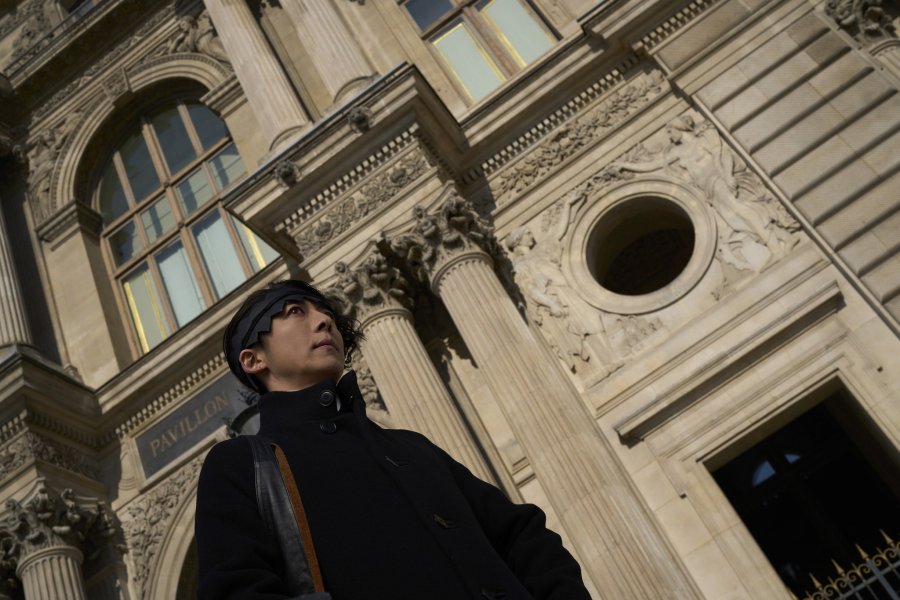
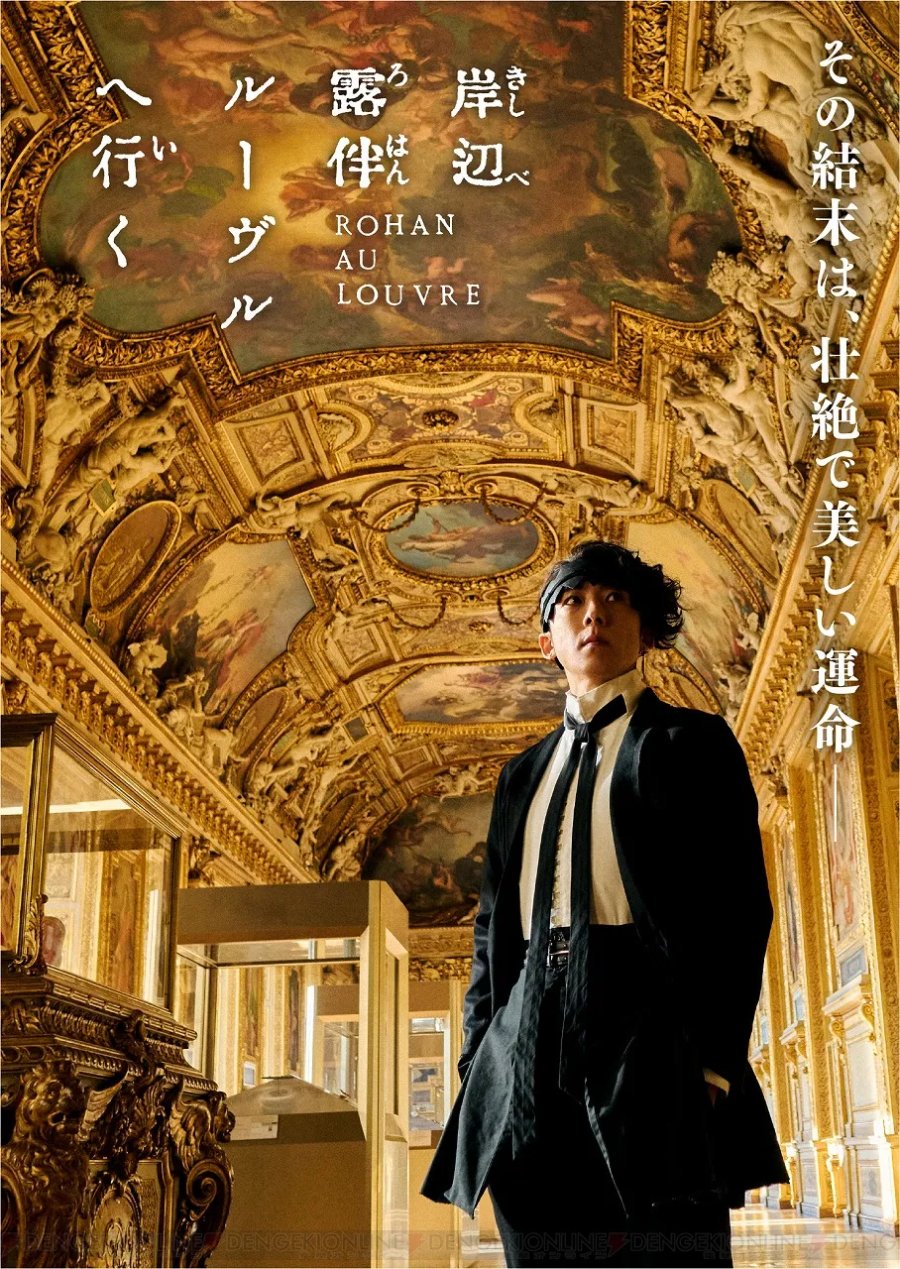
A mangaka faces the dark, dark past in Kazutaka Watanabe’s adaptation of Hirohiko Araki’s one-shot comic.
“No one can run away from a blood relationship.”
JoJo’s Bizarre Adventure is a franchise that, despite its sheer popularity, has had few adaptations. It took almost thirty years before an anime adaptation was announced, and that was only a couple of years after an animated movie was released and promptly completely erased from existence. Takashi Miike’s live action adaptation of part four never got a sequel, and we’re still waiting for part 7 to be announced in the anime. In short, the state of JoJo adaptations isn’t great. Thankfully, there’s one spin-off series that’s picking up the slack: the live action Thus Spoke Kishibe Rohan, which just got its first movie in Rohan at the Louvre.
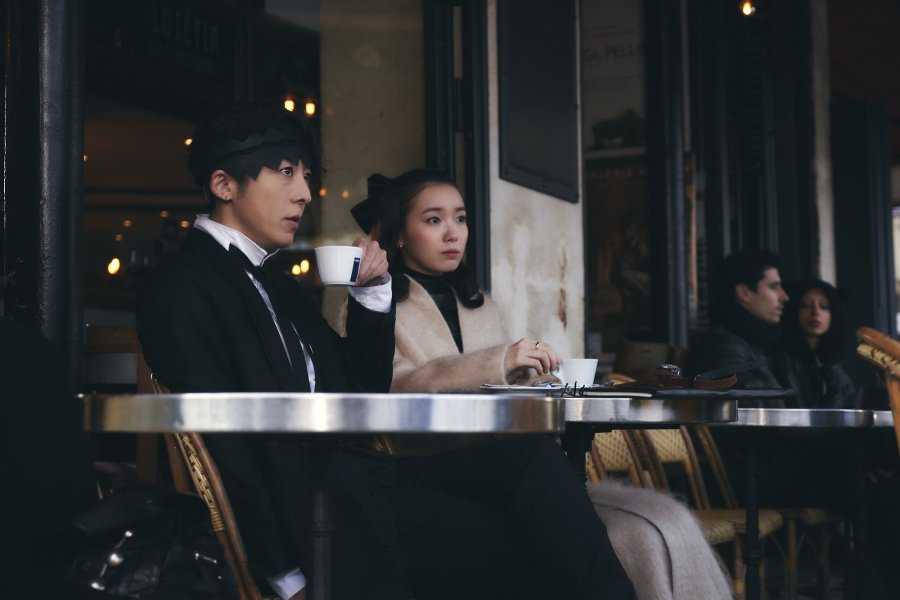
Kishibe Rohan (Issei Takahashi) is a world-famous mangaka with a mysterious gift: an ability to open people up like books, letting him read people’s personalities, histories and is even able to change parts of their character. Staunchly dedicated to his craft, he finds himself fascinated with a painting he learned of as a youth: a piece painted with a pigment blacker than any available colour. There is almost no information on its creator, but the Louvre museum appears to have the answers he needs. With his publicist Izumi (Marie Iitoyo), he travels to Paris. But things take a turn when he arrives, as he learns of the figurative darkness that lurks within the literal darkness of the piece.
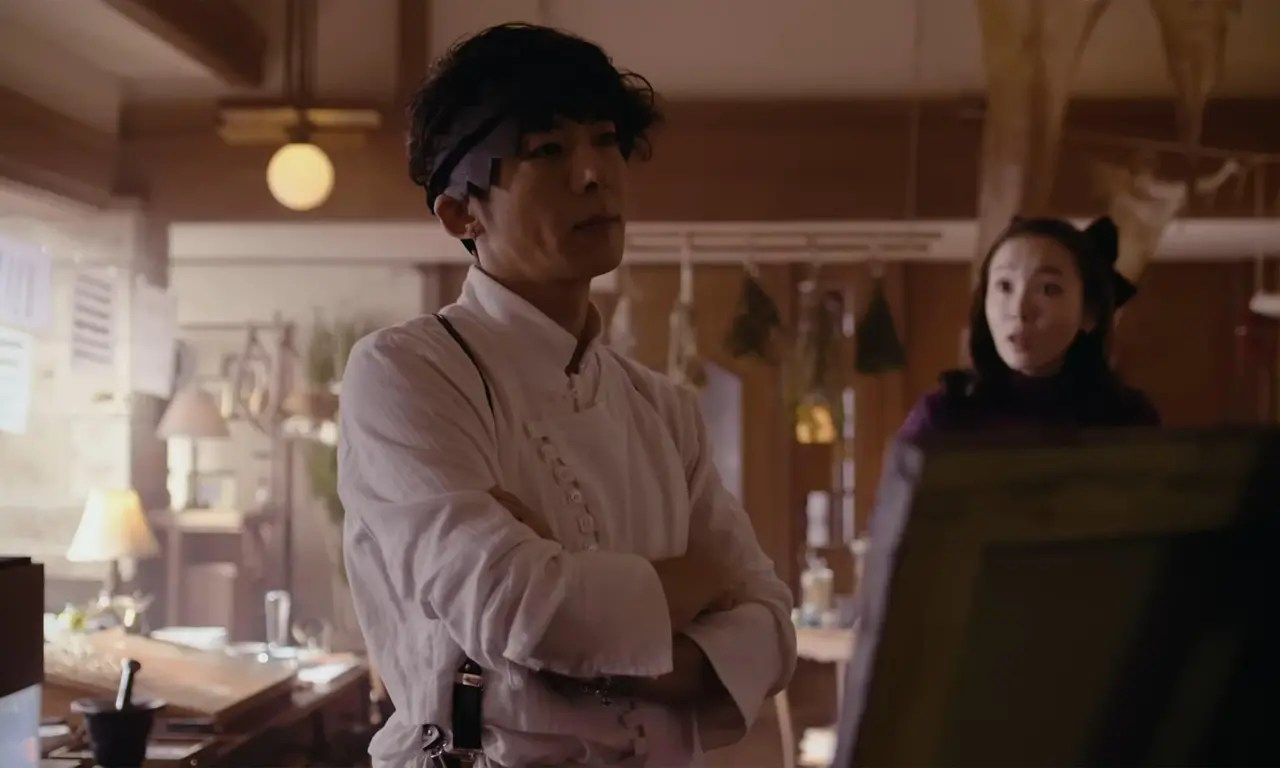
As I hinted at above, Rohan at the Louvre is an adaptation of the one-shot comic by Hirohiko Araki, written in collaboration with the Louvre museum. That itself is related to his Thus Spoke Kishibe Rohan comic, which is in turn a spin-off of a larger manga series. It’s an extension of the Thus Spoke Kishibe Rohan live-action drama adaptation (which also has a separate animated version). All of that is to say that the film is a long way removed from its original source, and at times it certainly shows.
This isn’t necessarily a bad thing, though. Rohan at the Louvre doesn’t remotely feel like a JoJo product. Nothing, from the calm atmosphere, the emphasis on quiet drama, and the complete lack of wackadoo nonsense (except for maybe two poses from Rohan), betrays its source material. Even the titular character Rohan is a bit removed from his origin. His Stand ability, Heaven’s Door, lost its physical form, and is instead made to look like a strange superpower he has. It’s odd, and it fits with the tone of the Rohan show, but it’s just lacking the sort of JoJo vibe that, say, Takashi Miike gave the series. With that in mind, I actually really enjoyed the way it looked, and while Watanabe’s visual style might be a touch muted for the material, it’s something of which I would want to see more.
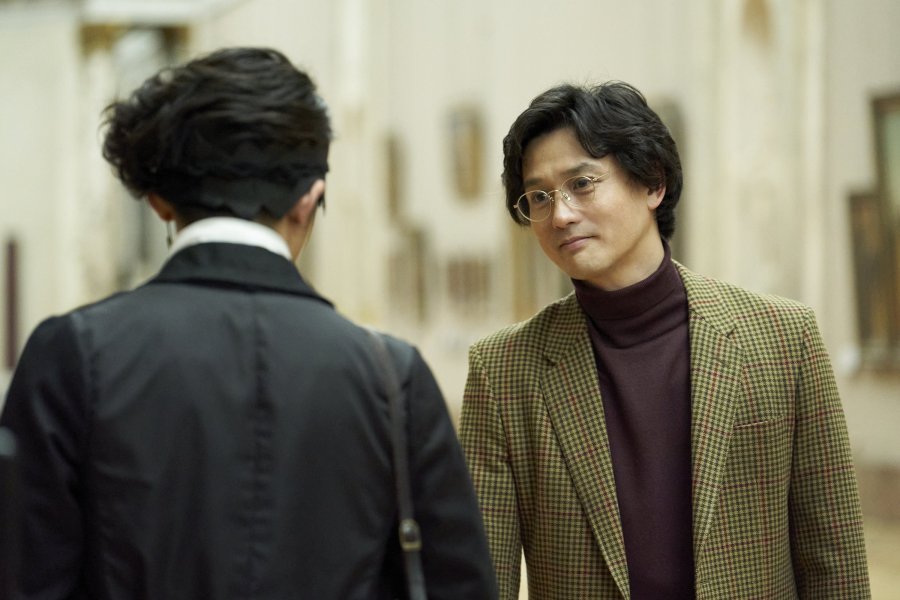
So as a piece of JoJo media it’s not the best. There’s no posing, no outrageous fashion, and no stands. As a standalone film, it’s a bit confusing, but there’s nothing that’s entirely alienating to newcomers. It’s a movie that’s made for fans of the show, and in that context it’s not bad. Takahashi is still a top-tier Rohan. He’s a bit older and acts a touch more stoic than his drawn counterpart but his unflappable nature, devotion to his craft and wry sense of humour is spot on. Takahashi has been playing the role for a few years now, and has it down pat.
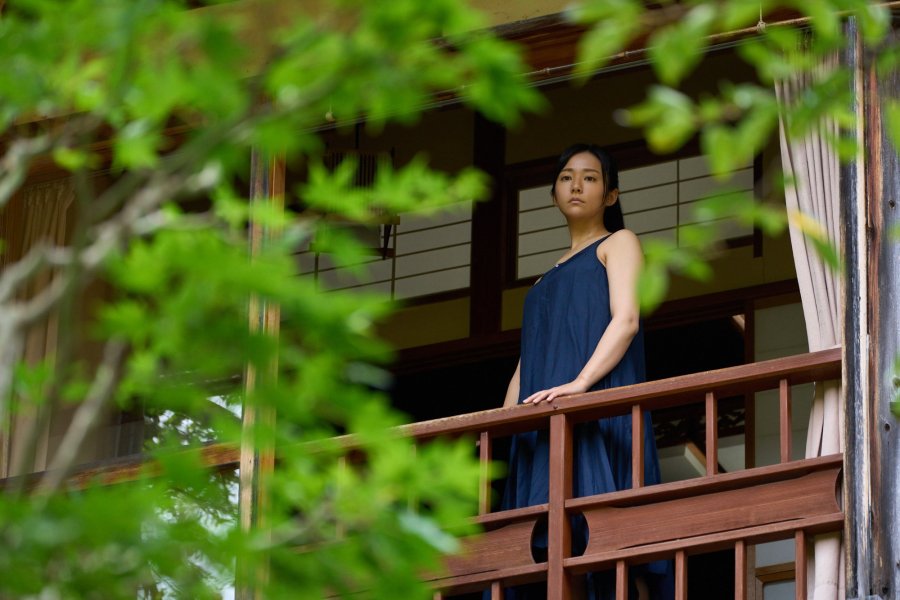
If anything, it’s a little too much like the show in that, despite being almost two hours long and released theatrically, there’s not a lot that feels particularly cinematic about the movie. And it’s not for lack of moments from the source material, either, with a second half that racks up the tension and gore once the evil painting is revealed, as ghosts from people’s pasts show up to wreck house. That sort of happens in the movie, but they decide to show it all from an outsider’s point of show, showing nothing but people reacting to things that aren’t there. My biggest gripe is not that it’s a bit slow, it’s that once things get going, they actively pull back the horror that was so prevalent in the comic, which feels antithetical to Araki’s natural style.
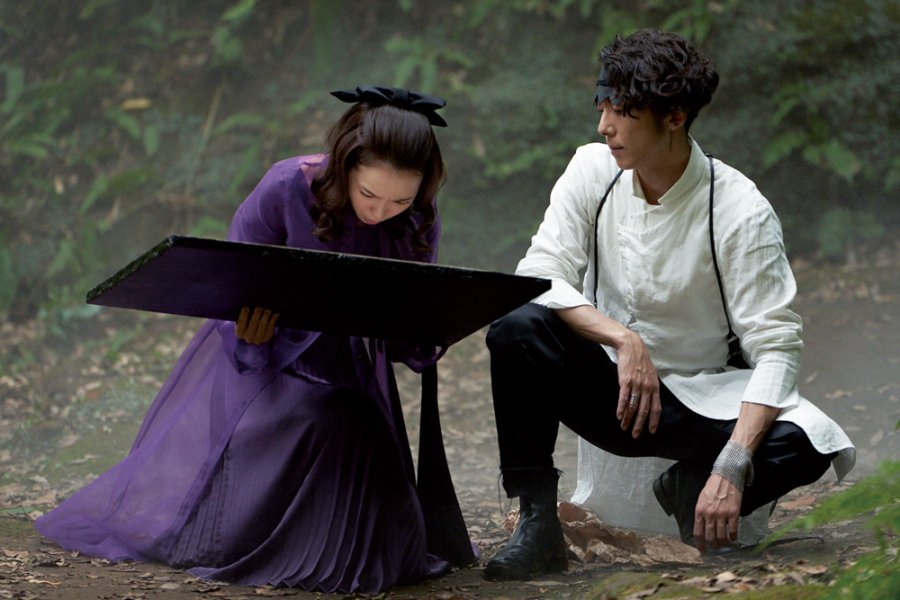
That notwithstanding, it’s a pretty faithful adaptation, and nothing is really cut out. There is a lot more added to the script, including an entire subplot about a forger named Maurice LeGrand, which plays into the story well. Overall, it’s not going to get non-fans into JoJo, and I doubt all that many fans of the series are going to put this on repeat they might the show, or even the Rohan OVA. It’s not bad and as a JoJo diehard, I’m glad it exists. I wish they’d have shown Heaven’s Door in its Pink Dark Boy form, though.
Verdict: Not much more than an extended episode of the show, Rohan at the Louvre is still a good time for fans of the character and the franchise, but won’t win any newbies over.
Overall entertainment: 6.5/10
Violence: 2/10
Sex: 0/10
Soundtrack: 10/10
Takahashi’s French: Impeccable
The Louvre: An almost comically difficult name to say in Japanese
Spiders: Everywhere
Stands: Never heard of them.
—-
Rohan at the Louvre (2023)
Also known as: 岸辺露伴 ルーヴルへ行く
Japanese
Director: Kazutaka Watanabe
Writers: Hirohiko Araki (manga), Yasuko Kobayashi (screenplay)
CAST
Issei Takahashi – Rohan Kishibe
Marie Iitoyo – Kyoka Izumi
Masanobu Ando – Ryonosuke Tatsumi
Fumino Kimura – Nanase
Minami – Emma Noguchi
Kento Nagao – Teen Rohan
 The Asian Cinema Critic
Leave a comment