Good cinema cures all in Hideo Jojo’s charming comedy drama.
“I watch two movies a month, even if I’m broke. It’s a matter of pride.”
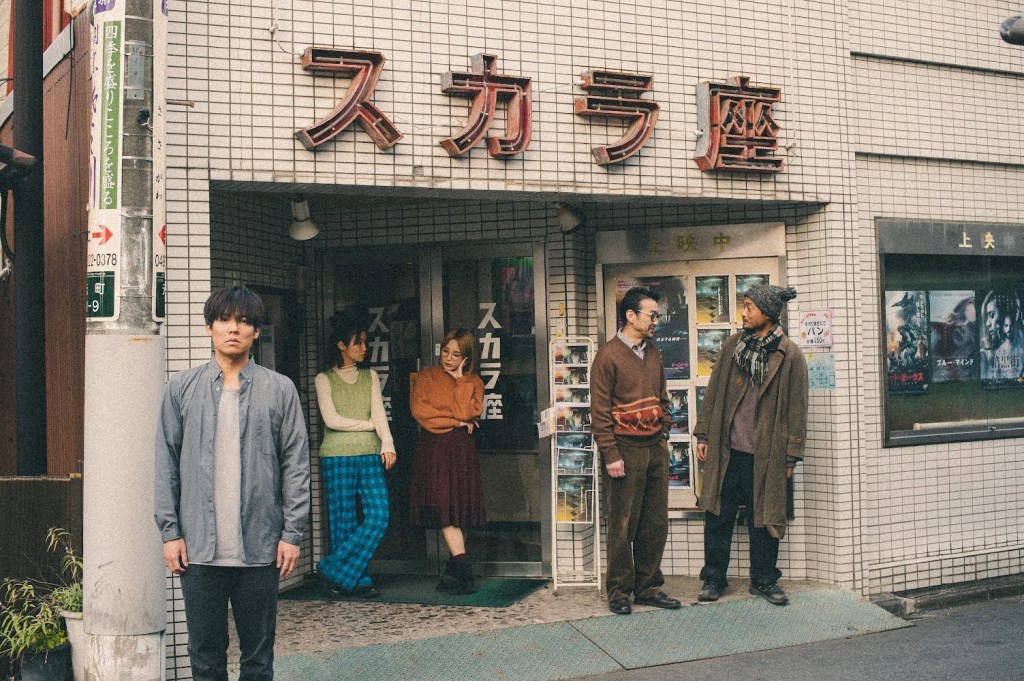
Kondo (Keisuke Koide) is a disillusioned and depressed former film director whose life has led him to become homeless. Returning to his home town, he encounters long time homeless man and film fanatic Sato (Shohei Uno) who inspires Kondo to visit the old Scala Movie Theatre and get a job there. The theatre, run by Kajiwara (Mitsuru Fukikoshi), isn’t doing too hotly, but with Kondo’s help he and the rest of the staff get together to help the cinema regain its former glory.
There’s something about Twilight Cinema Blues that reminds me of some of my favourite Japanese cinematic experiences. The ones I had watching Fine, Totally Fine or Tanpopo. There’s a low-key, quiet charm to the movie that gives you the urge to go to a small Japanese town, hang out with these people and tell stories equal parts silly and serious. It’s fitting, then, that the film is a love letter to movies and to the theatres that screen them.
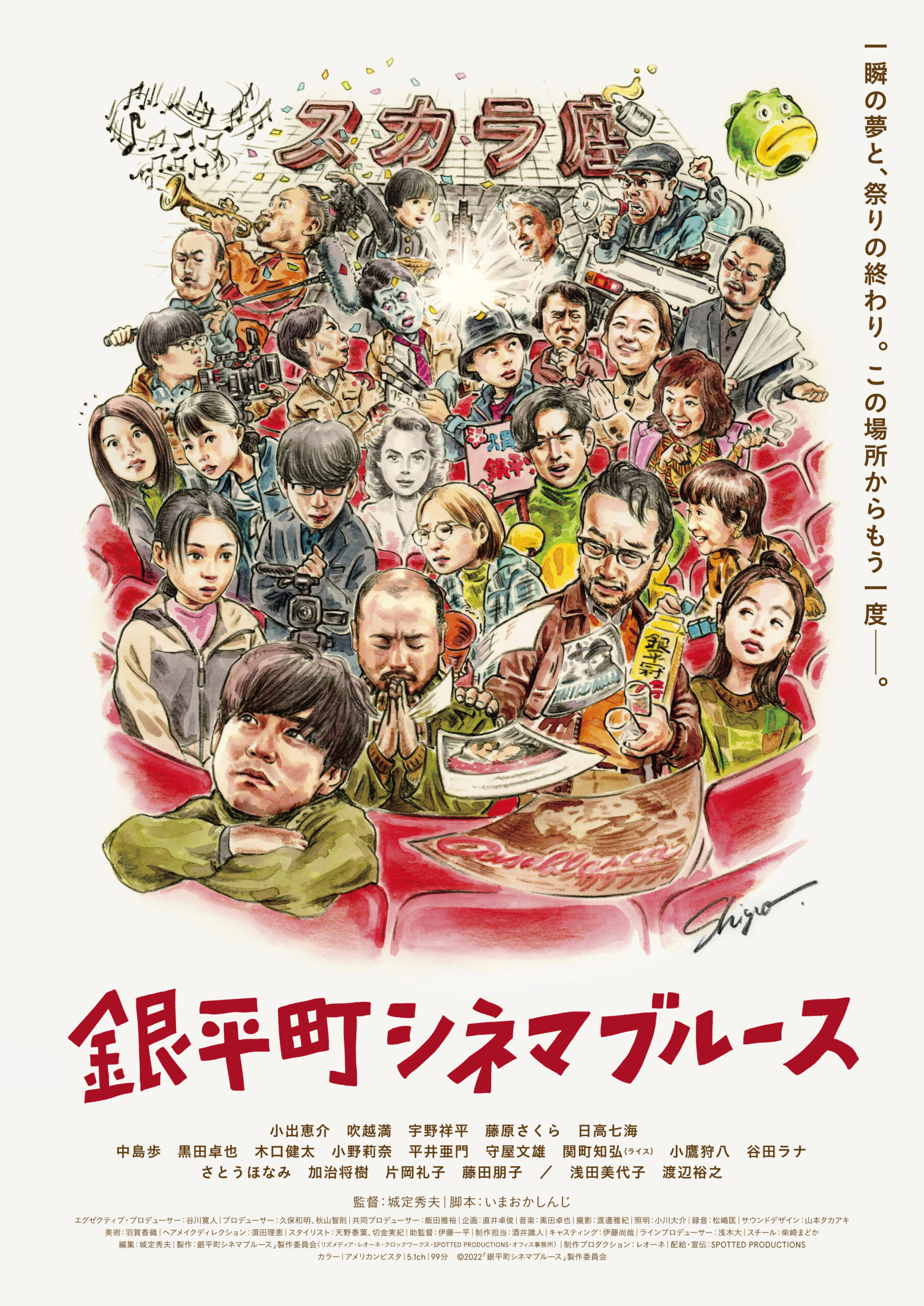
Two things really keep the film moving: the cast, and the laid-back energy that permeates the story. The actual plot kind of doesn’t matter with movies like this, but as it is, this is one of the more focused ones, with only a few deviations from its story. As for the characters, there’s an array of different sorts who frequent the cinema, from the washed up actor (Ayumu Nakajima), the struggling writer (Kenta Kiguchi), and the guy who plays jazz trumpet solos and can’t figure out why no one wants to date him (Takaya Kuroda). They all lend their unique flavour to this melting pot, and might even bring their own little subplots.
That said, at its worst, Twilight Cinema Blues just sort of drags on in places thanks to those subplots. The middle part of the film can feel a touch sluggish, and I checked my watch more than once while watching it. The biggest offender I found was the side story about the incredibly shady welfare programme. It was fun, but a bit too silly even for this film, and as a satire didn’t really work. It could also be that my lack of knowledge on the Japanese welfare system caused this fly over my head, but I found it all to not work quite as well as I imagine the filmmakers wanted it to.
But those are minor grips for a film that, at its core, is about a group of hugely loveable people coming together to help each other out. This does lead to some pretty heavy topics, including suicide, divorce and homelessness, but manages to keep things airy and fun without making light of those serious subjects. Because at the end of the day it’s an optimistic movie about finding your happiness in whatever way it shows itself. Coupled with a jazzy soundtrack and some subdued cinematography and the result is a charming, good time of film that shows that when we band together, we can overcome the most dire of personal problems.
Verdict: Sometimes a bit sluggish, Twilight Cinema Blues’ laid-back style allows it to tell a serious story, without drowning itself in drama.
Overall entertainment: 7/10
Violence: 0/10
Sex: 0/10
Funerals: 10/10 use of As Time Goes By
Couples: No idea Yoko and Kajiwara were together
Cinematography: Lots of lovely cool winter colours
Film festival: The films they’re watching at the end look like absolute dogshit, huh
Twilight Cinema Blues (2023)
Also known as: 銀平町シネマブルース, Ginpeicho Cinema Blues
Japanese
Director: Hideo Jojo
Writer: Shinji Imaoka
CAST
Keisuke Koide – Kondo
Mitsuru Fukikoshi – Kajiwara
Shohei Uno – Sato
Sakura Fujiwara – Erika
Nanami Hidaka – Miku
Hiroyuki Watanabe – Taniguchi
Ayumu Nakajima – Watanabe
Takaya Kuroda – Shirakawa
Kenta Kiguchi – Nasu
 The Asian Cinema Critic
Leave a comment