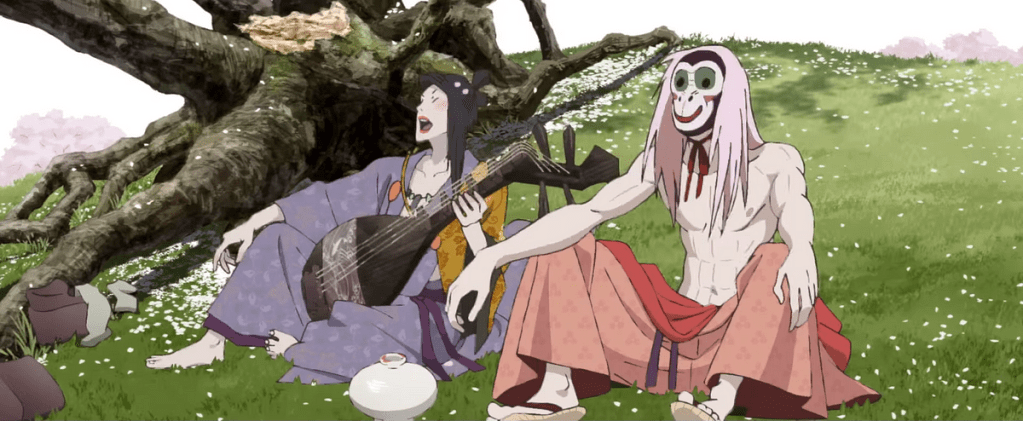
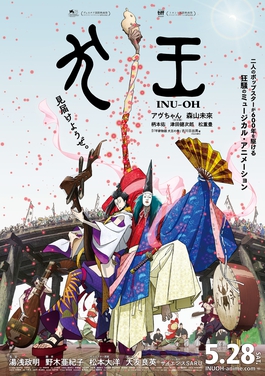
Music gives new life to the deceased in Masaaki Yuasa’s tribute to history, performance arts and hair metal.
“Here we are. You and me.”
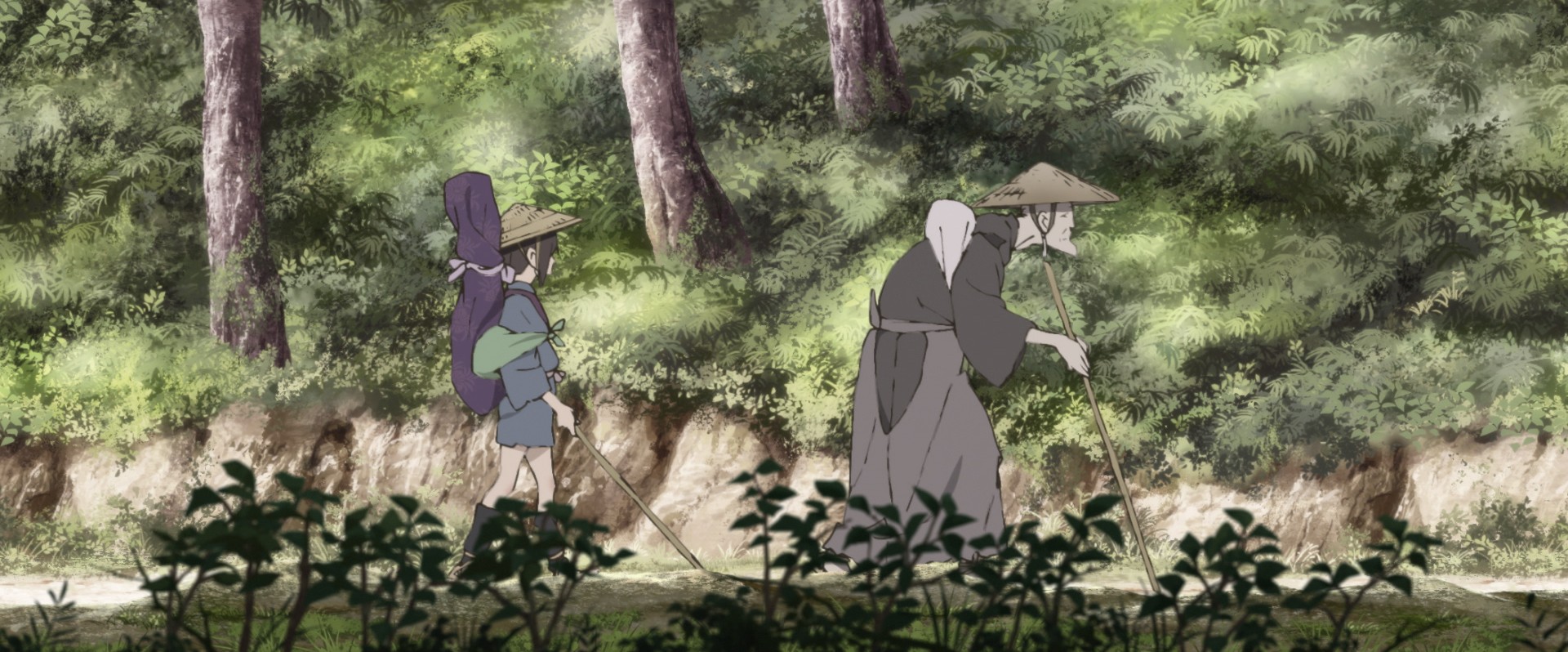
Tomona is a young diver, hired along with his father by the shogun to retrieve one of the Imperial Regalia, lost to a river after a war three hundred years ago. They find it, but the sword’s magic kills the father and blinds Tomona. Desiring vengeance and egged on by the ghost of his father Tomona travels, and encounters a group of blind biwa players, whose troupe he joins. Later, in the capital he meets a disfigured young man, whose curse has caused him to live on the streets, like a dog. He takes to calling himself Inu-Oh because of this.
Tomona notices Inu-Oh is being followed by dozens of spirits of fallen Heike solders – those who lost the battle on the river – who tell Inu-Oh their stories. Tomona and Inu-Oh decide to form their own band, developing a more modern style, and set out to sings about the stories of these lost soldiers, winning the hearts of the people along the way.
Directed by Masaaki Yuasa and produced by Science SARU, a combination which always results in something unique, Inu-Oh is a fantastical musical rooted in just enough reality and history to keep it compelling and affecting. It’s based on a novel which in turn is loosely based on historical individuals, though little is known of the supposedly real Noh performer of the same name. On its surface, the movie is modelled like a pretty straightforward biopic, with a pretty familiar rise to fame story, and in places where that’s the focus, that’s where the movie falters a touch.
Where it excels is in its themes, of those discarded and forgotten being able to tell their stories, finding love and redemption in the process. When Inu-Oh goes full-on, it gets pretty powerful. The film highlights the importance that music brings to telling stories otherwise lost. Through Inu-Oh and Tomo[na/ichi/ari], these stories find new life, new audiences and, most importantly an appreciation and respect the soldiers never got when they were alive.
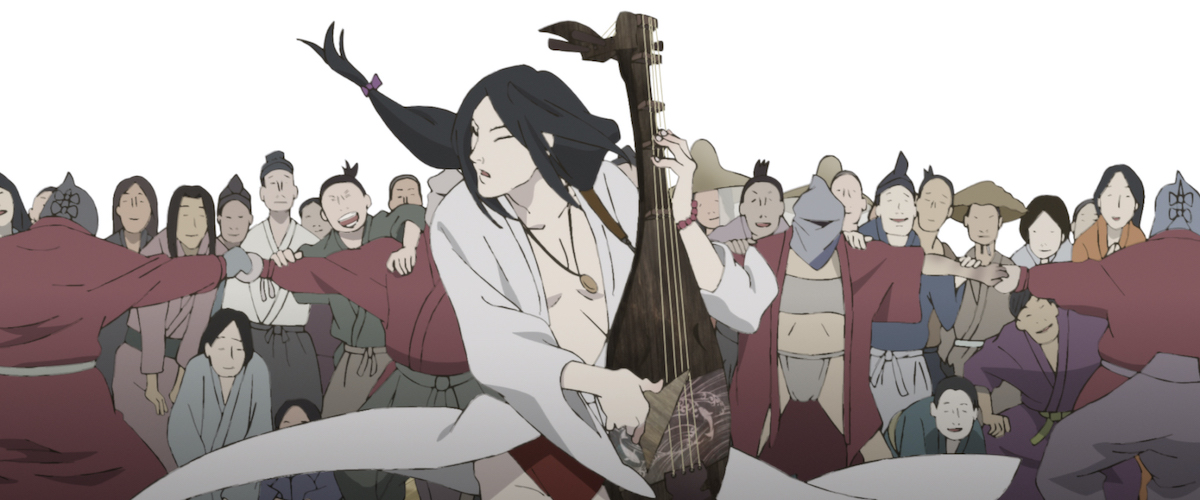
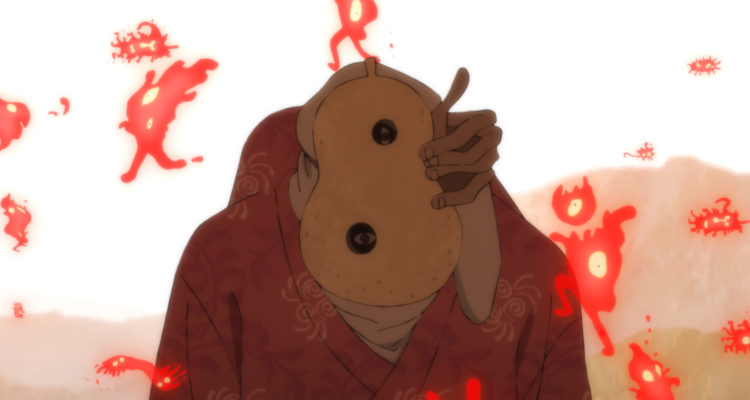
Still, part of the reason the story works is thanks to its truly great visual style, without which Inu-Oh would probably have been fine, if forgettable. The film uses its visual medium to perfectly showcase the transcendent power of music, as well as giving us some unique ways to depict Tomona’s blindness. These visual representations from Tomona’s point of view are really nicely done, with patches of colour popping up whenever a character makes noise or makes themselves known. In fact whenever the film moves away from its standard anime look to something more ethereal, Inu-Oh shines just a touch more.
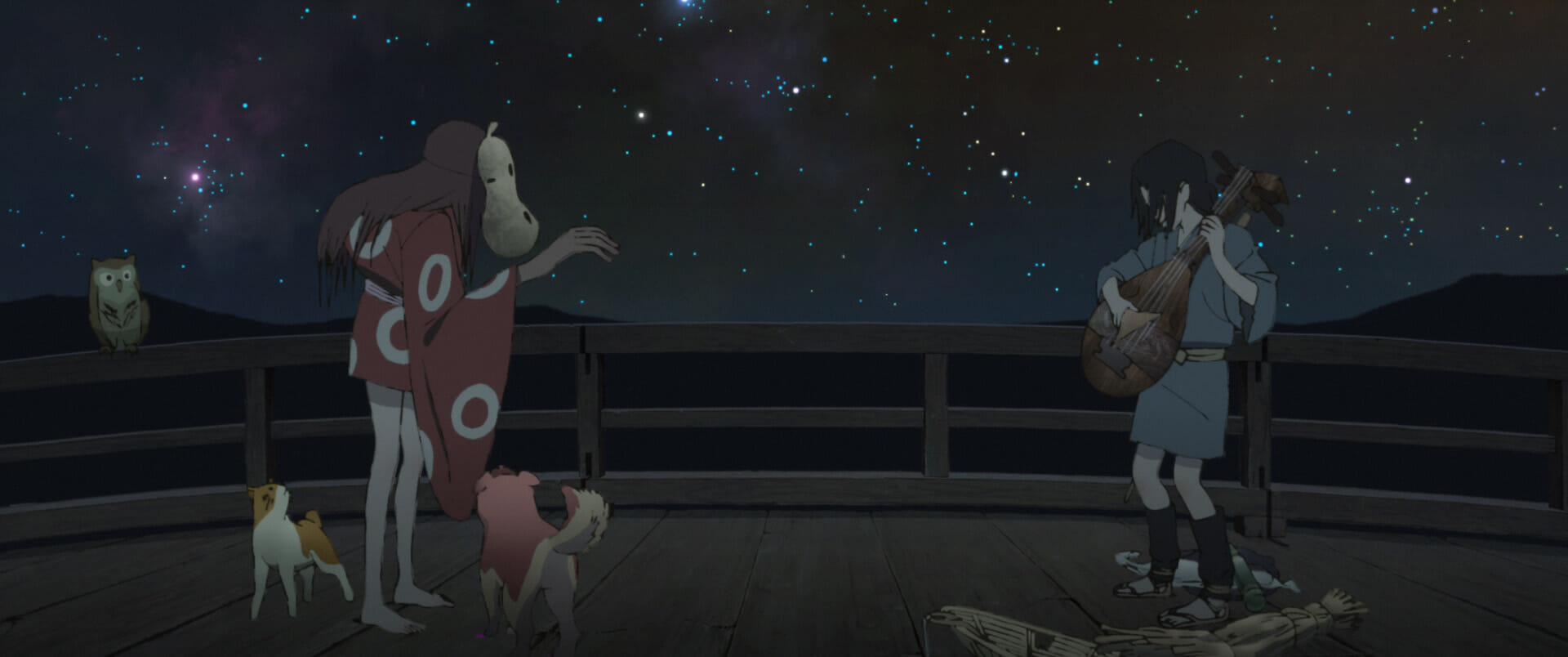
It’s this style that helps the film really find its footing, and stand out as something more mystical and fantastical. Inu-Oh is a film that knows its strengths, and lets them raise the lesser parts of itself to make a film that is more than the sum of its parts. Its two leads work well together, and are equally likeable, while being distinct in their wants and needs – especially once the final few minutes roll around. The visuals purposefully offer a lot of standard anime style scenes to elevate the spiritual stuff, and the music is – while sometimes repetitive – almost always a complete bop. This is Science SARU doing what it does best, a tradition I hope is not lost at the bottom of a river.
Verdict: Wonderfully imaginative and fancifully told, Inu-Oh tells a few compelling stories, and throws in some banger earworms for good measure.
Overall entertainment: 8/10
Violence: A higher than expected 4/10
Sex: 0/10
Music: 8/10
Horrific pregnancies: 1
Hie za: For the masses, duh. Kanze is for those in the know.
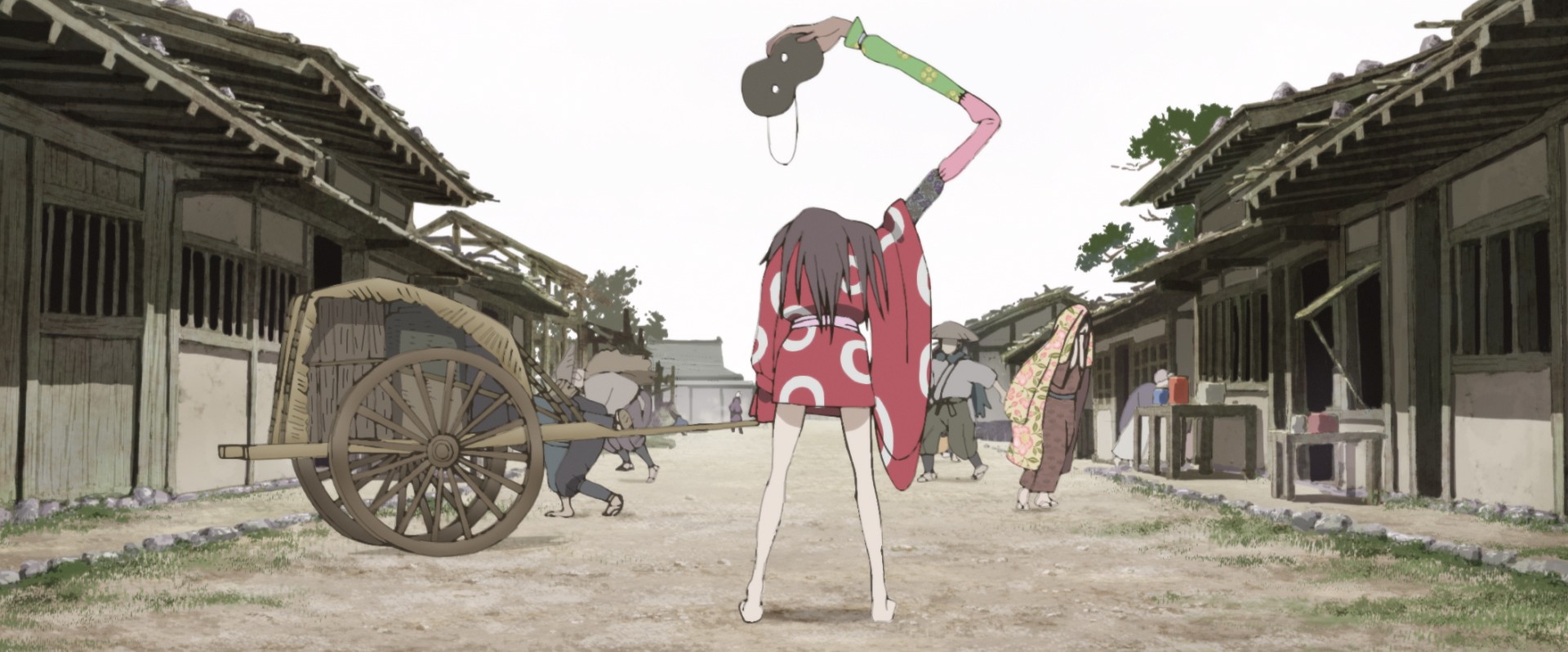
Inu-Oh: How is he able to dance so effectively with his limbs constantly changing size
Inu-Oh (2021)
Also known as: 犬王
Japanese
Director: Masaaki Yuasa
Writer: Hideo Furukawa (novel), Akiko Nogi (screenplay)
CAST
Avu-chan – Inu-Oh
Mirai Moriyama – Tomona
Tasuku Emoto – Shogun Ashikaga
 The Asian Cinema Critic
Leave a comment