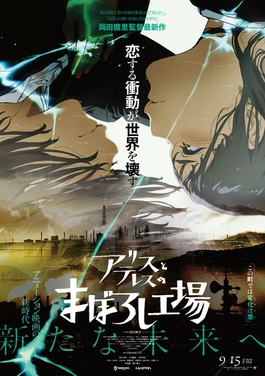
A mystical steel mill traps a town in an endless winter, and that’s the least weird thing about Mari Okada’s fantasy romantic drama.
“Is there anything that is right in this world?”
I’ve become somewhat wary of original animated movies from big studios, these past few years. While it’s always great to see studios better known for animated franchises expand into new stories and different worlds, the ambition-to-result ratio doesn’t always work out. I seem to find that the scope of the story never really fits into a single 2-hour feature, resulting in a movie with eyes bigger than its stomach.
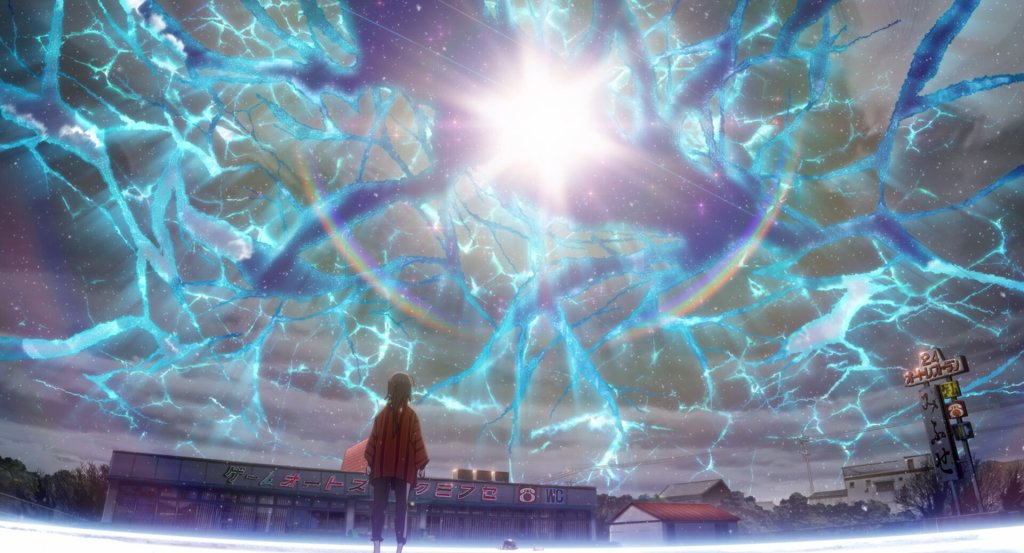
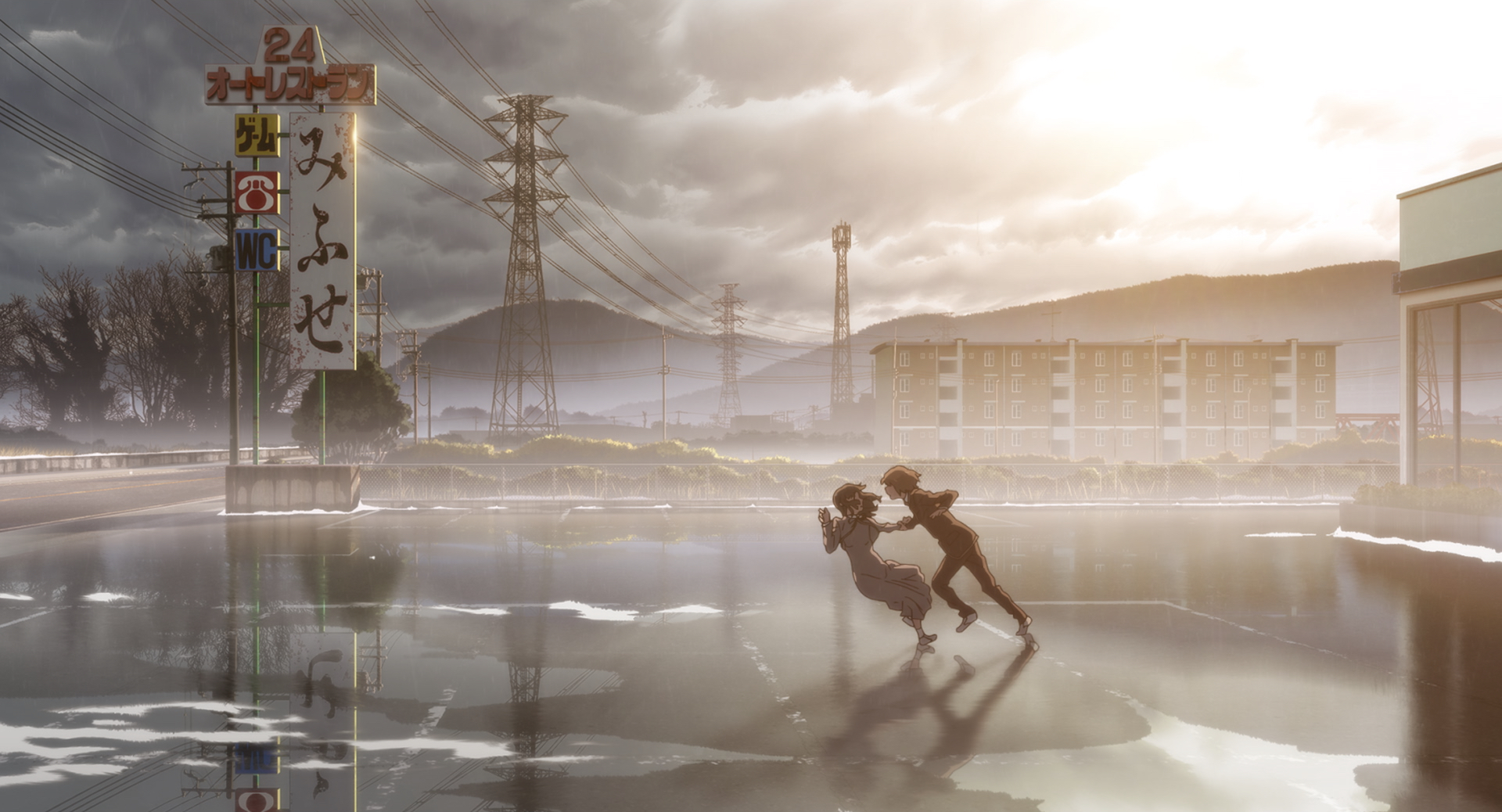
So I stepped into Maboroshi with a bit of trepidation. The film begins one evening in 1991, with four friends witnessing their town’s steel factory explode. The event causes the sky to crack like glass, and ghostly smoke spirits emerge from the factory to seal it up. Since that event, the town has been frozen time, with everyone inside unageing, unable to feel pain, and completely trapped in an endless winter. Masamune, our main character, is one townsfolk struggling to get by when living is not an option. He befriends Mutsumi, a girl who is as bored as he is but who has a secret: she’s been looking after a feral girl who’s being kept captive in the steel mill. As Masamune learns more about the girl, and grows attached to Mutsumi, the secrets behind the town’s stasis become unveiled.
Coming from MAPPA, the studio behind Jujutsu Kaisen and the later seasons of Attack on Titan, the first thing of note is how well animated it is, and how beautiful the art direction is, bolstered by a bigger budget and more production time than television would allow. While much of Maboroshi consists of low-key scenes of the main characters talking, walking or just hanging around, the moments when it needs to go big and showy it does; the visual of the shattered sky never fails to impress, as relatively simple as it is, and its introduction improves an already stellar opening scene.
Where it falters a bit is where all these sorts of movies do: in its story and its pacing. Unfortunately, the movie can’t escape the failings of its predecessors, though it is an improvement over similar films. Writer-director Mari Okada has made a few of these, notably the weird romantic comedy where a girl becomes a cat, but this is her most sophisticated film yet She throws a lot of story at us, and manages to make it work decently for the most part. There aren’t too many new terms, and the basic plot is pretty straightforward once you get your head around it. It even felt familiar, somehow.
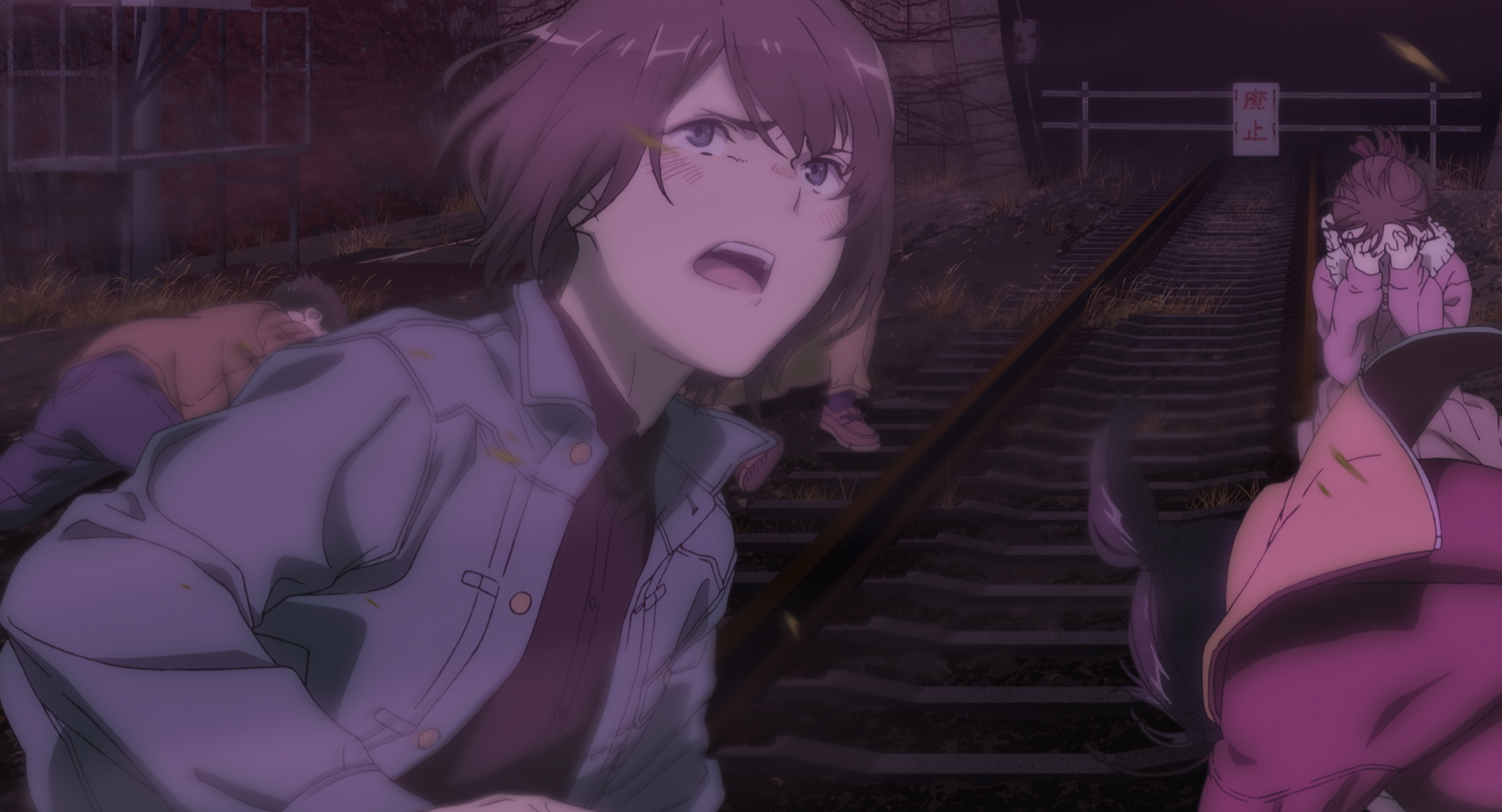
The pacing is still absolutely all over the place, with the story feeling like it’ll be over before the first hour even wraps up. This leaves you feeling more like you’re watching a few episodes of a TV show over an actual film. That’s been my criticism of many of these movies before, but once again Okada manages to mitigate many of the issues that have come before.
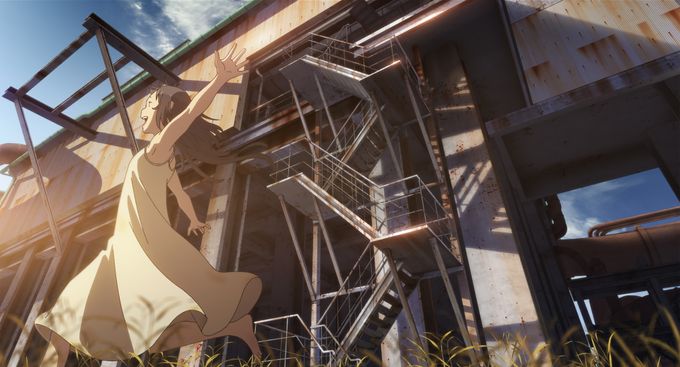
In the end, Maboroshi isn’t a half bad film. It had some fresh ideas that – wait. I remember now. It’s Final Fantasy X. This movie is basically just Final Fantasy X! – are pretty thought-provoking. Its themes are strong, and its characters are actually very likeable and relatable. Topped with some gorgeous animation and the end result is something that isn’t perfect by any stretch, but was entirely worth watching. It didn’t make me weep like Final Fantasy X did, but that’s probably for the best. I don’t want a Sacred Wolf to devour me.
Verdict: Maboroshi is – if nothing else – gorgeously animated, wholly sincere, and has a pretty killer train climax to boot.
Overall entertainment: 7/10
Violence: 3/10
Sex: Poor kids, being trapped at that age
Oedipus complexes: One? Zero? Who knows
World-building questions: Do these people eat? Where do they get their produce?
And: Why are they even at school?
Endless adolescence: Better than being pregnant for 10 years, I guess
Japanese title: Fuck knows what that’s about
Maboroshi (2023)
Also known as:
: リスとテレスのまぼろし工場, lit. Alice and Therese’s Illusory Factory
Japanese
Director: Mari Okada
Writer: Mari Okada
CAST
Junya Enoki – Masamune Kikuiri
Reina Ueda – Mutsumi Sagami
Misaki Kuno – Itsumi
Koji Seto – Akimune
Setsuji Sato – Mamoru Sagami
Kento Hayashi – Tokimune
Taku Yashiro – Sasakura
Tasuku Hatanaka – Nitta
Daiki Kobayashi – Senba
Ayaka Saito – Sonobe
Maki Kawase – Hara
Yukiyo Fujii – Yasumi
 The Asian Cinema Critic
Leave a comment