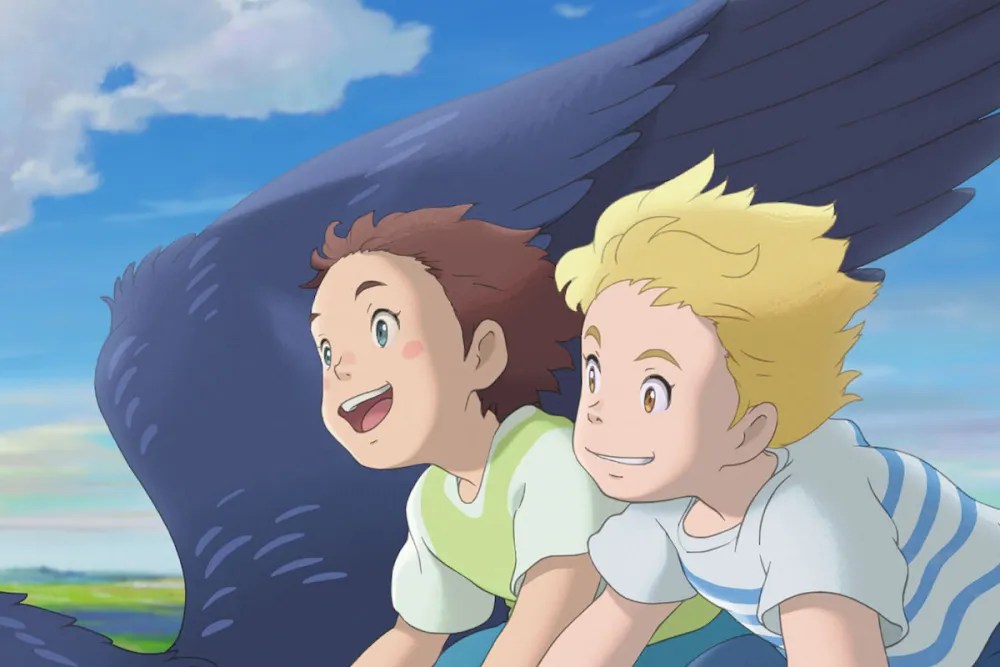
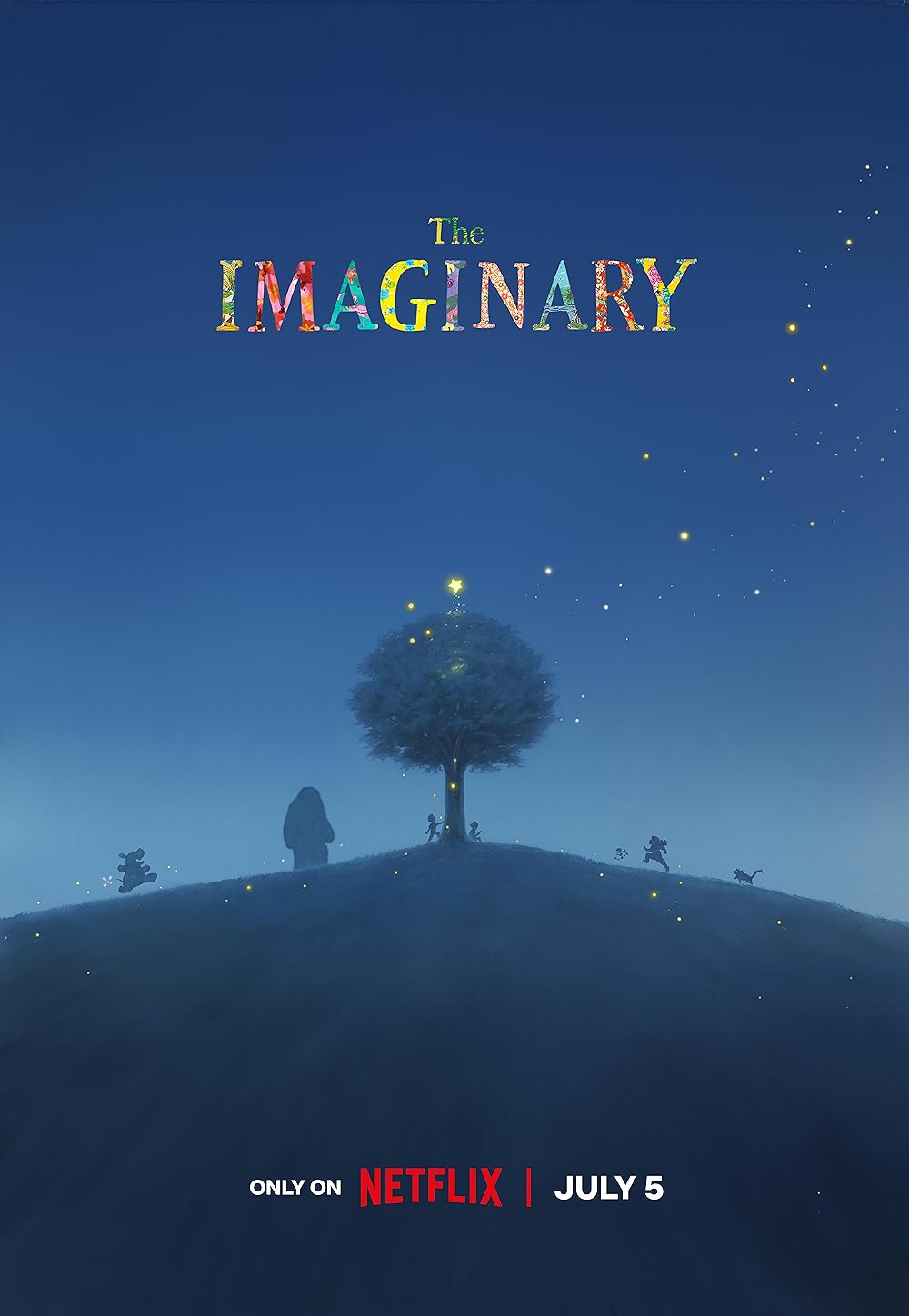
An imaginary friend faces a very real threat in Yoshiyuki Momose’s animated fantasy.
“That’s why she imagined you. Because you are the answer.”
Did any of you guys have imaginary friends growing up? Like someone you preteneded was real, but clearly wasn’t. If the movies are to be believed you would also insist they were real to your parents, who thought it was cute, until it was proven that imaginary friends actually are real. I played with toys, and wrote stories and adventures for my toys to go on, but I was never in those stories. My time in imagination land was largely with my real friends, or solo on boring, rainy days. So, to me, the filmmaking trope of the real-fake imaginary friend has never really spoken to me, but it’s always been quite fascinating. Naturally, I was curious as to what Studio Ponc’s latest adventure, The Imaginary, would bring.
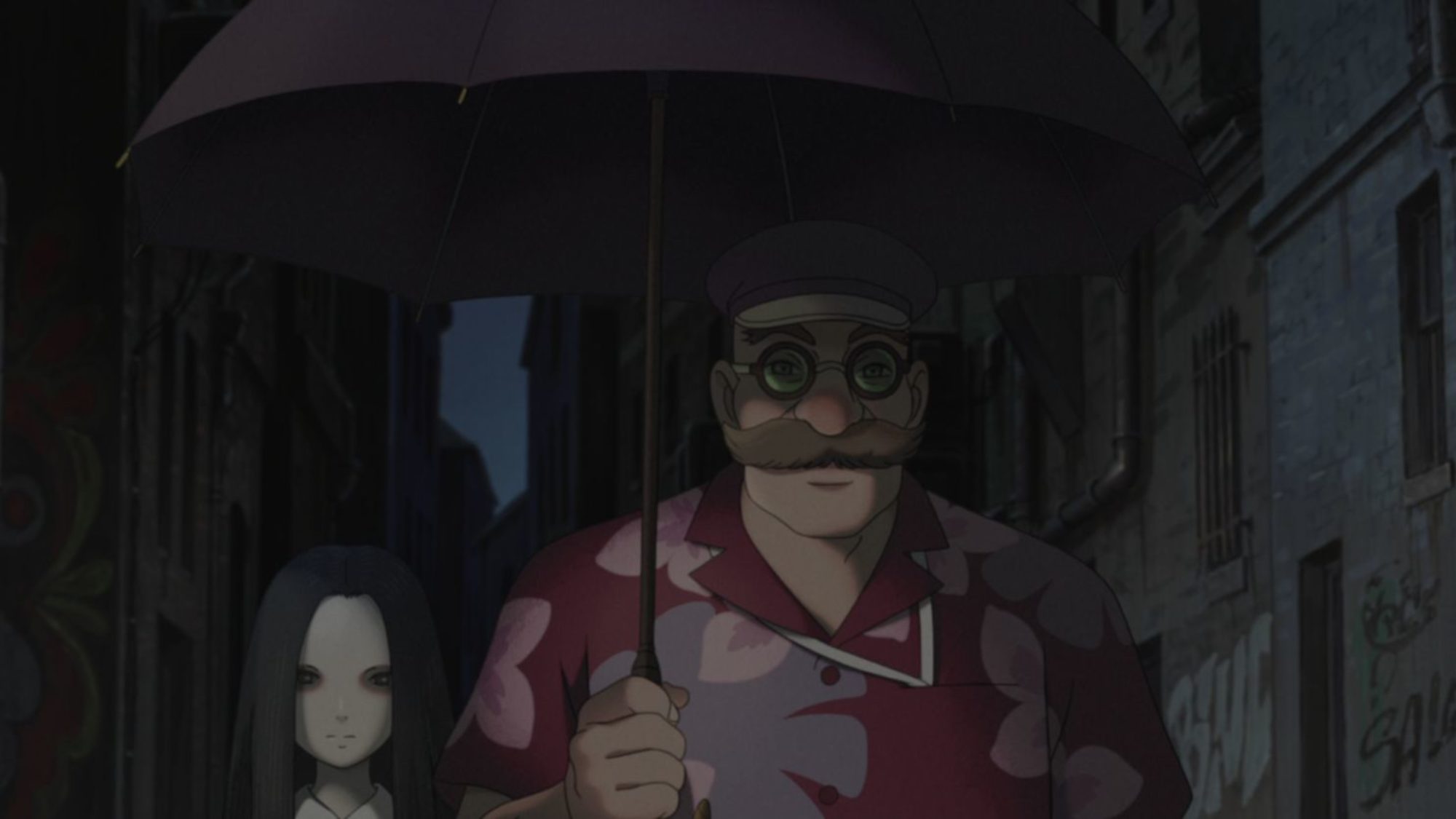
Based on the book by A F Harrold, The Imaginary follows Rudger (not Roger), an imaginary friend dreamt up by a precocious young girl called Amanda. Living and playing above her mother’s bookshop somewhere in a small British town, things seem great – until a mysterious man called Mr Bunting shows up. He has an imaginary friend of his own, which Amanda can see, who attacks Rudger. A second encounter with Bunting puts Amanda in the hospital, fighting for her life and Rudger without a human. It’s there that he encounters JInzan, an imaginary cat, who leads him to Emily, an Imaginary who runs the Library, a place where imaginary friends can find lonely kids who are ready to dream up a new pal.
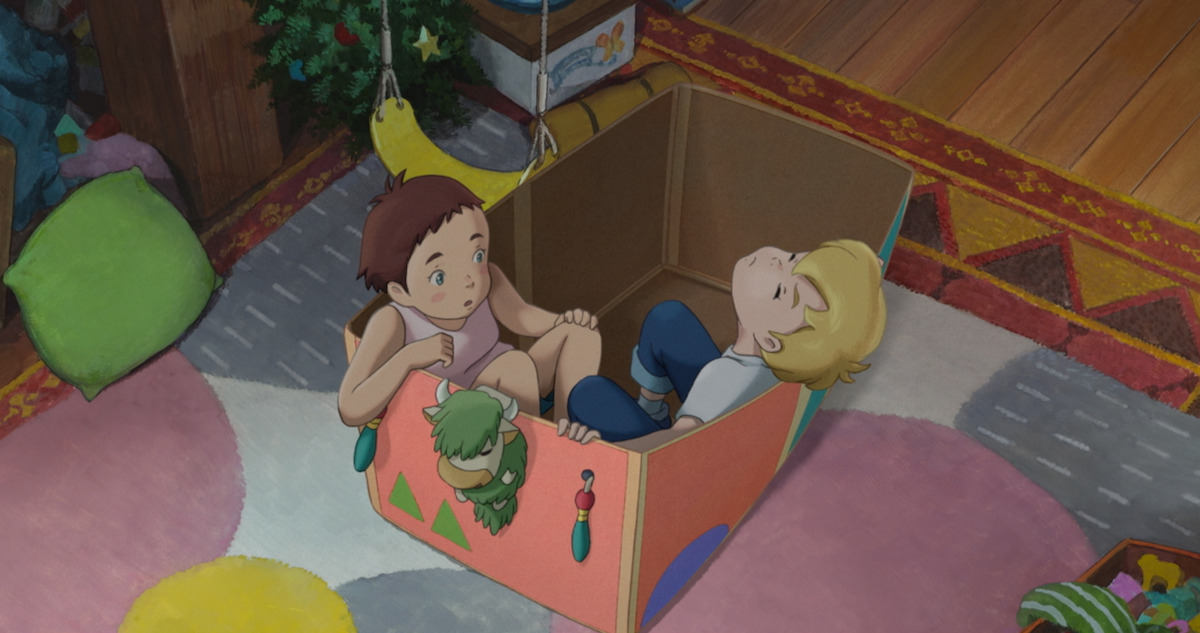
The first thing that struck me about The Imaginary is in just how much like a Pixar film it feels. This isn’t really a bad thing – early Pixar is an excellent thing to be compared to – but it was a feeling that stuck with me throughout. It was basically like Toy Story meets Monsters, Inc, for better or worse. And while I know that Pixar doesn’t have a monopoly on the “human concepts are living things in their own world” idea, it’s one that’s so intrinsically tied to them that it’s impossible to ignore when it shows up in other films.
Ponoc already has a difficult time trying to distance itself from Ghibli, so adding another layer of comparison can’t be helpful. Still, the studio does its best and comes out with a world that’s equal parts familiar and unique. As for the actual rules of this world, well, they aren’t too clear some of the time. What it is that causes an Imaginary to die, or retire, or just mooch about the library seems contradictory at times. It’s not a huge issue, really, and does nothing to negate the emotional impact of the story but it does leave moments when you’re not sure what the stakes are. Would Snowflake really have died if he couldn’t open the door to the outside world?
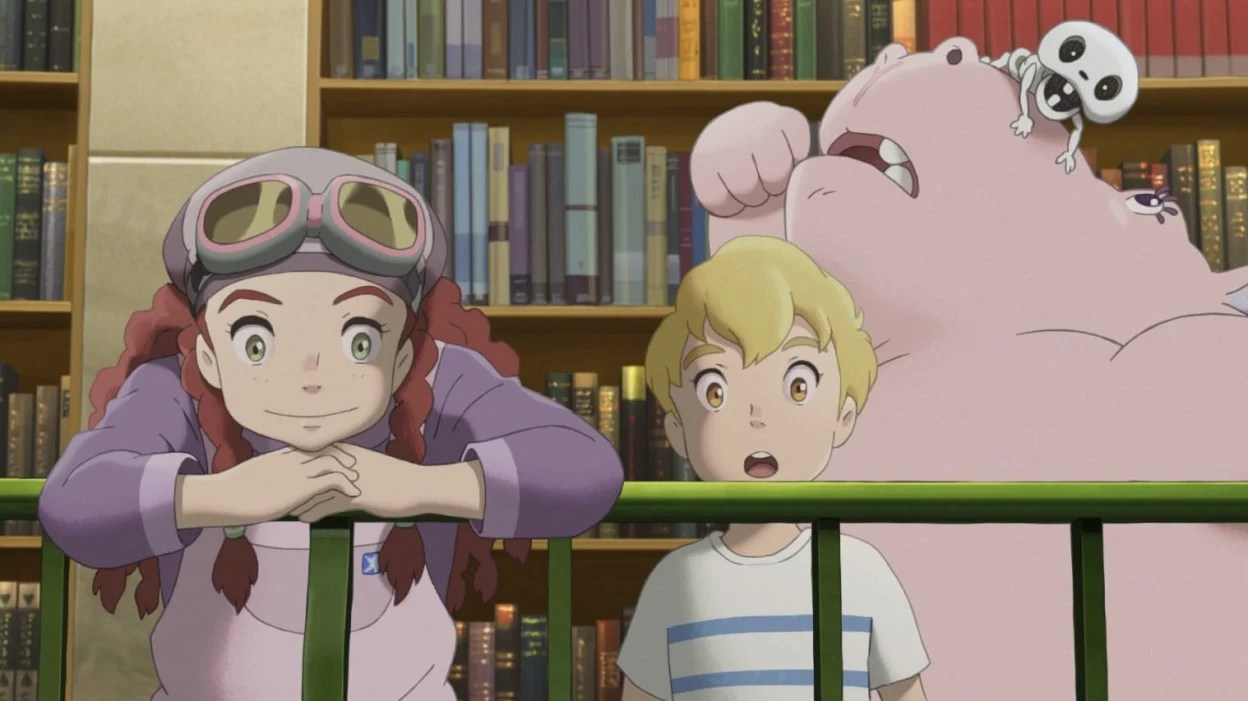
The animation and the production design are both on point, with the film’s version of England being as precise as I’ve ever seen on film. The studio’s design sensibilities are still so firmly rooted in Ghibli, but at this point they’ve stuck it out long enough to comfortably call it their style too. It’s different enough – a bit brighter in colours, and bubblier in shape language – that no trained eye is mistaking one studio for another, but it still would have been good to them go a completely different route.
I liked this film a lot. Mr Bunting and his imaginary friend were really fun as villains, reminding me of classic Neil Gaiman baddies, and the world was fun to explore. It might have touched upon topics that never were a part of my childhood but some of the more sentimental parts about moving on, adulthood and childhood innocence hit home in a way I’d imagine a lot of people would appreciate too. Couple these emotional, sweet scenes with the studio’s tried and tested animation style and you have a film that might not reach the height of its competitors but does a pretty damn good job nonetheless. It’s the studio’s strongest film to date, and as a result The Imaginary doesn’t need to pretend in order to be good.
Verdict: Loaded with childlike wonder and the realities of adulthood, The Imaginary is a strong offering from a studio that’s only getting better.
Overall entertainment: 8/10
Violence: 2/10
Sex: 0/10
Imagination-o-meter: 7/10. Good, but Amanda can try harder
Best Imaginaries: Cruncher of Bones
Logic: Some
—-
The Imaginary (2023)
Also known as: 屋根裏のラジャー (Rudger in the Attic)
Japanese
Director: Yoshiyuki Momose
Writers: Yoshiaski Nishimura, A F Harrold (novel)
CAST
Kokoro Terada – Rudger
Rio Suzuki – Amanda Shuffleup
Sakura Ando – Elizabeth Shuffleup
Riisa Naka – Emily
Takayuki Yamada – Jinzan
Akira Terao – Fridge
Issey Ogata – Mr Bunting
Hana Sugisaki – Aurora
Mitsuaki Kanuka – Snowflake
Teiya Ichiryusai – Cruncher of Bones
Atsuko Takahata – Downbeat Grandma
 The Asian Cinema Critic
Leave a comment