Family can be both a blessing and a curse in Jen Wan’s classic drama.
“Apart from making money, I don’t do anything.”
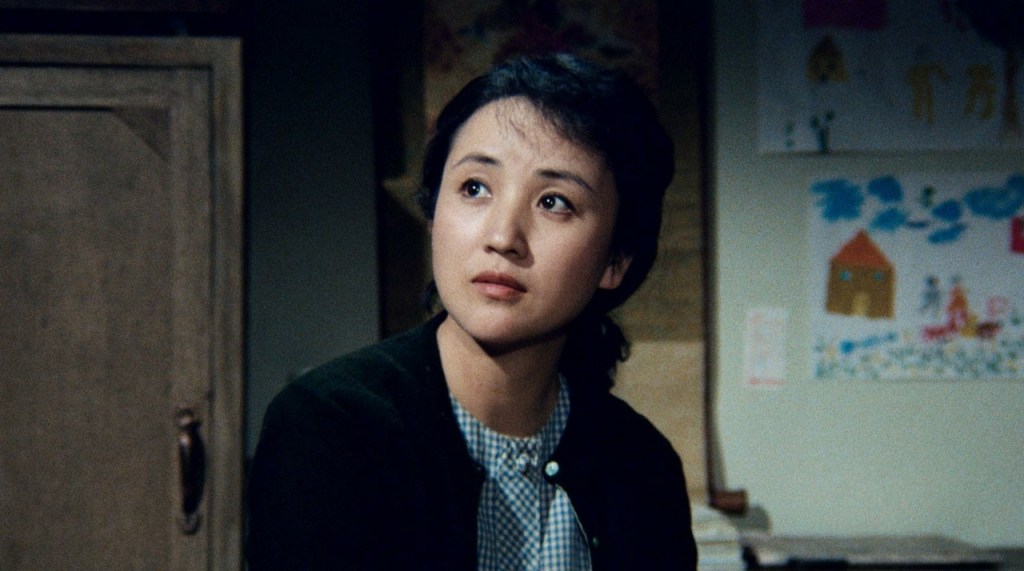
Following a family from their beginnings in the early 60s, all the way through to the 80s, Ah Fei is about more than just its titular character from whose point of view the movie is largely told. The first half of the film focuses more strongly on mother Hsin-chin (Chen Chiu-yen), stuck in an unhappy marriage with a husband (Ko I-chen) who takes her dowry and uses it to go out, drink and sleep around. His bad attitude colours the family’s quiet country life, so much so that they end up relocating to Taipei to make ends meet. As Ah Fei (Su Ming-ming) grows, so does her role in the film. With agency, she’s able to build a life for herself, but is unable to really escape the grasp of her mother, who had relied on her since she was barely five.
Ah Fei is a film that has a lot to say about family, about the responsibilities we have towards the ones we love, even when we know those responsibilities actively harm us. The title character has a lot to do from her first moments, and shoulders more burdens than any child her age should. Hsin-chin’s sadness directly affects Ah Fei, and this is shown to be increasingly true as time passes and Hsin-chin’s jaded nature becomes more and more prominent.
As such, it isn’t just a singular story, but a dual one: an entirely separate study on the mother. Hsin-chin is given arguably more spotlight – certainly in the first half – and her embittered persona towards the end of the movie is entirely justified from the shit we saw her go through when she was raising three (later four) children almost by herself. But it doesn’t make it any easier to watch her behaviour near the end of the film. What makes the film work really well is that both of those stories end up complimenting each other perfectly. One story feeds directly into the other, and as a result it’s hard to separate the two, interwoven as they become.
True to life, the movie has neither good nor bad characters. The two most complex – Ah Fei’s parents – are seen throughout as having major qualities in either direction. Her father is inarguably a real piece of crap for most of the first half. He cheats on Hsin-chin, spends his wife’s dowry and generally treats her like shit. After they move to the city, however, he mellows out considerably and begins to understand his responsibilities as a father.
Ah Fei herself is a great character study, and is played marvellously by a slew of talented actresses. Chen Chiu-yen has the responsibility of the adult version, and has a lot of history to bring to the performance. Together with director Wan Jen (and author Liao Hui-ying, whose novel on which it is based), she builds a powerful character, one that haunted by her rough past but keen to move on and live her life her way. It’s a wonderfully realistically-written piece of cinema, and one that will no doubt resonate with a lot of people.
Ah Fei won’t be for everyone. It’s a pretty slow-moving, often pretty grim look at the ups and downs of family life, but it succeeds in being extremely real. It speaks volumes that the story, even almost forty years later, and coming from an entirely different culture, can connect to people still. Even if you’re never had a family like Ah Fei’s, some of the strife they go through and parts of this tale of generational trauma will be bound to speak to you in one form. After all, we’ve all been a little fucked up by our parents.
Verdict: Powerful, tragic but ultimately optimistic, Ah Fei is as strong and steadfast as its lead character.
Overall entertainment: 8.5/10
Violence: Some light domestic violence/10
Sex: I mean, Hsin-chin spends half the film pregnant
Drama: 8/10
Women: Are like rapeseed, obviously
Tsai Chin: Sings a mean theme song
—————–
Ah Fei (1984)
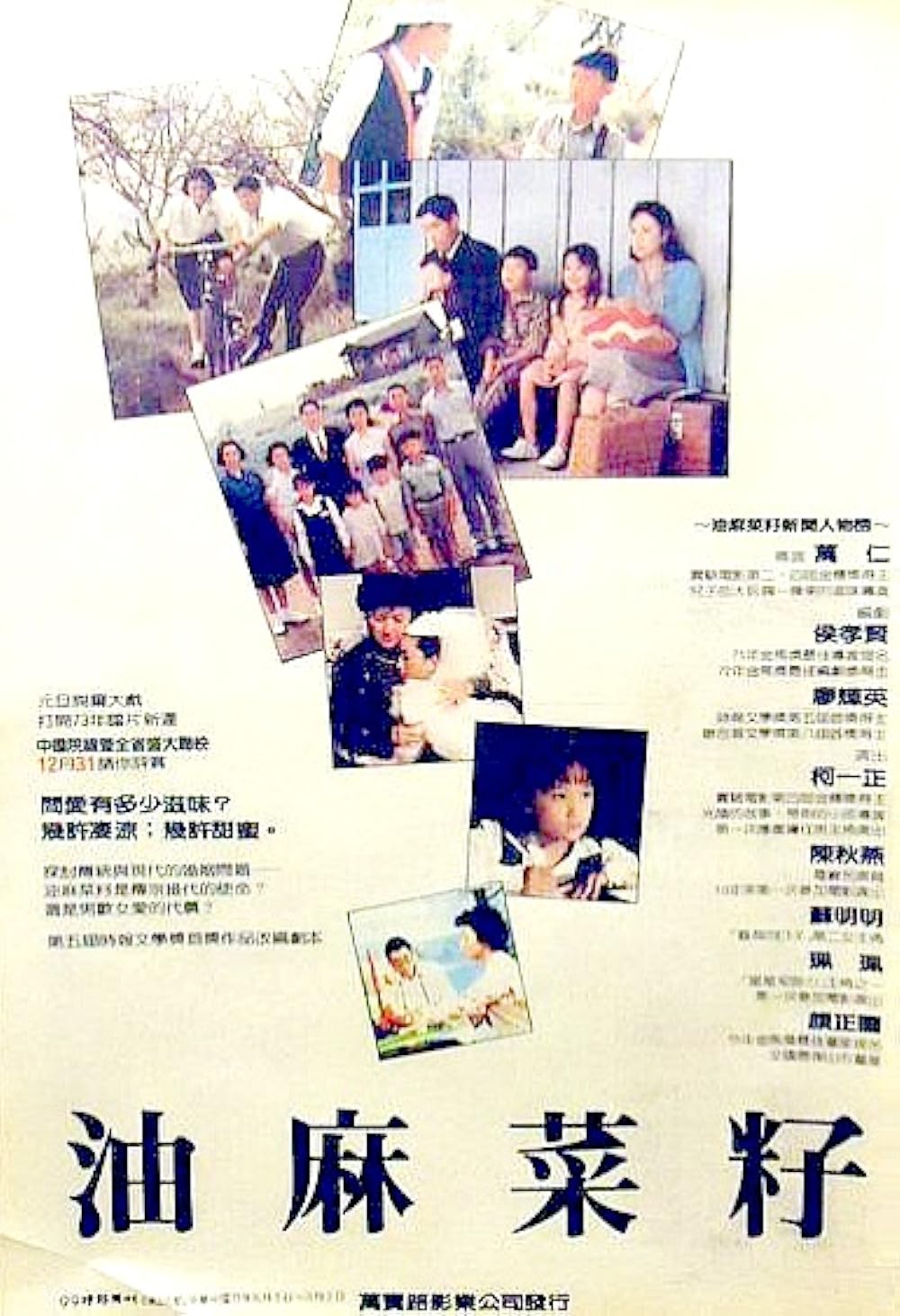
Also known as: 油麻菜籽.
Mandarin
Director: Wan Jen
Writer: Hou Hsiao-hsien (screenplay), Liao Hui-ying (screenplay)
CAST
Chen Chiu-yen – Hsin-chin
Su Ming-ming – Ah Fei (adult)
Tarcy Su – Ah Fei (teen)
Ko I-chen – Ah Fei’s father whose name escapes me
 The Asian Cinema Critic
Leave a comment