
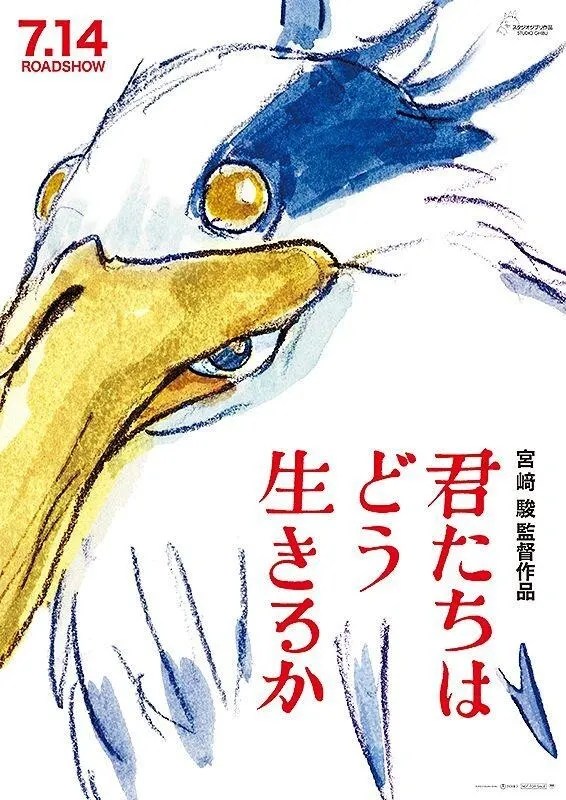
A young boy goes through the looking glass and ruffles more than a few feathers in Hayao Miyazaki’s probably-not-final feature.
“Those who seek knowledge shall die.”
It sure has been a while since Studio Ghibli released something good, huh? Almost ten years since When Marnie Was There (and that turtle film, but are we counting that?) with the only Earwig and the Witch to tide us over. How great it is then that that was not the final film to be released by them. Instead, after years of teasing a movie called How Do You Live, original Miyazaki returned with … well, that, but under a different name. And was it worth the wait?
The Boy and the Heron is set, as so many of Miyazaki’s films, during the Second World War. Mahito is a young teen who’s just gone through the terror of losing a parent: his mother, in a hospital fire. His father remarries shortly after, to his sister-in-law Natsuko who lives in a big estate in the country. There, Mahito struggles to adjust, naturally, and is constantly harassed by a grey heron – who seems to be guiding him to a mysterious tower on the property. He investigates the tower, with housemaid Kiriko in tow. After an encounter with the Tower Master, a mysterious old man, Mahito and the heron (actually a man, of sorts) are travelling through a magical world in search of Natsuko who has seemingly wandered in, in a dreamlike trance.
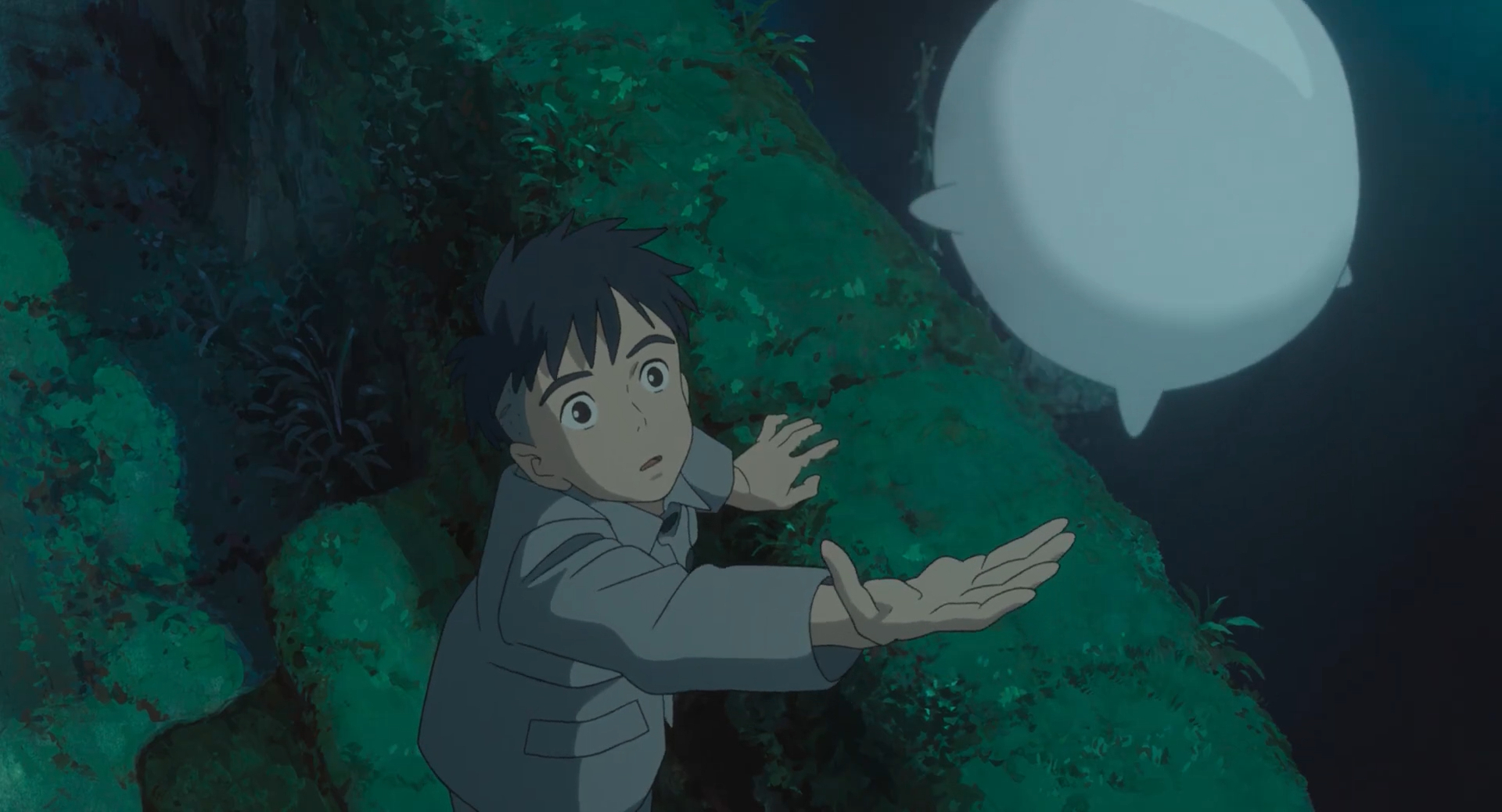
Miyazaki’s latest (and definitely not last) movie is one that might have a few similarities to other films from the studio, but it’s wholly unique nonetheless. It’s best compared to Spirited Away, Miyazaki’s other Alice in Wonderland-esque adventure but while that one had a whimsy to it, The Boy and the Heron is steeped in remorse, redemption and self-actualisation. The main character is pretty jaded and violent going in with most of his early actions involve but are not limited to: getting into fights at school, bashing his own head with a rock, and attempting numerous times to kill a heron. It’s a character whose life has been upended so violently that he doesn’t know how best to respond, and the story is one of him understanding how to put his energies into helping others.
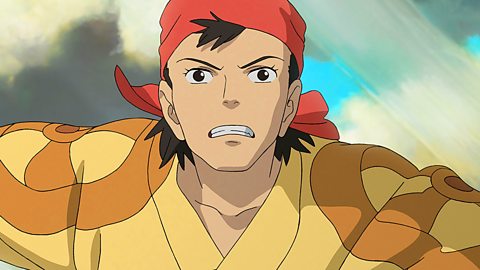
The adventure he’s set on, then, becomes one where he learns to let go of the past and create a bright future for not only himself but everyone around him. The postwar setting is fitting; it puts Mahito in the shoes of a young Miyazaki himself: one of many people on whose shoulder the responsibility of building a better world stands. The slight biographical similarities help give the story a more real, personal feel. On top of that, adventure itself is great fun, if maddeningly disjointed in places. The characters he meets are interesting and memorable, which isn’t always the case for Ghibli films, and the locales they inhabit are wonderfully imaginative and gorgeously rendered.
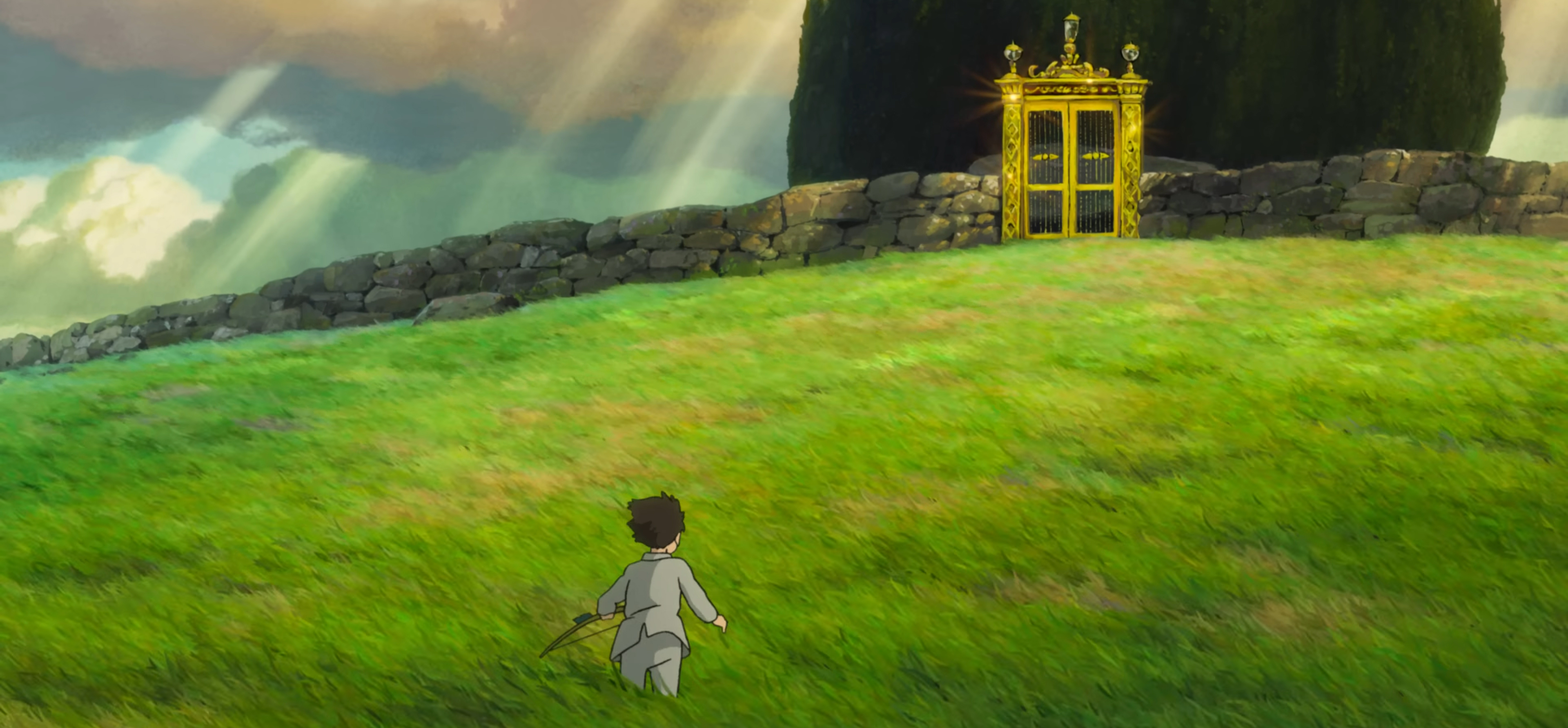
On the more negative end, if the sort of dream-logic World of the Dead stuff isn’t for you I can totally understand. There are character moments and story beats that come a bit out of nowhere, and the ending feels incredibly rushed. As a narrative, it’s not really that great. But thankfully films are there for a lot more than just a simple plot, otherwise you could just read the Wikipedia summary and get the same enjoyment.
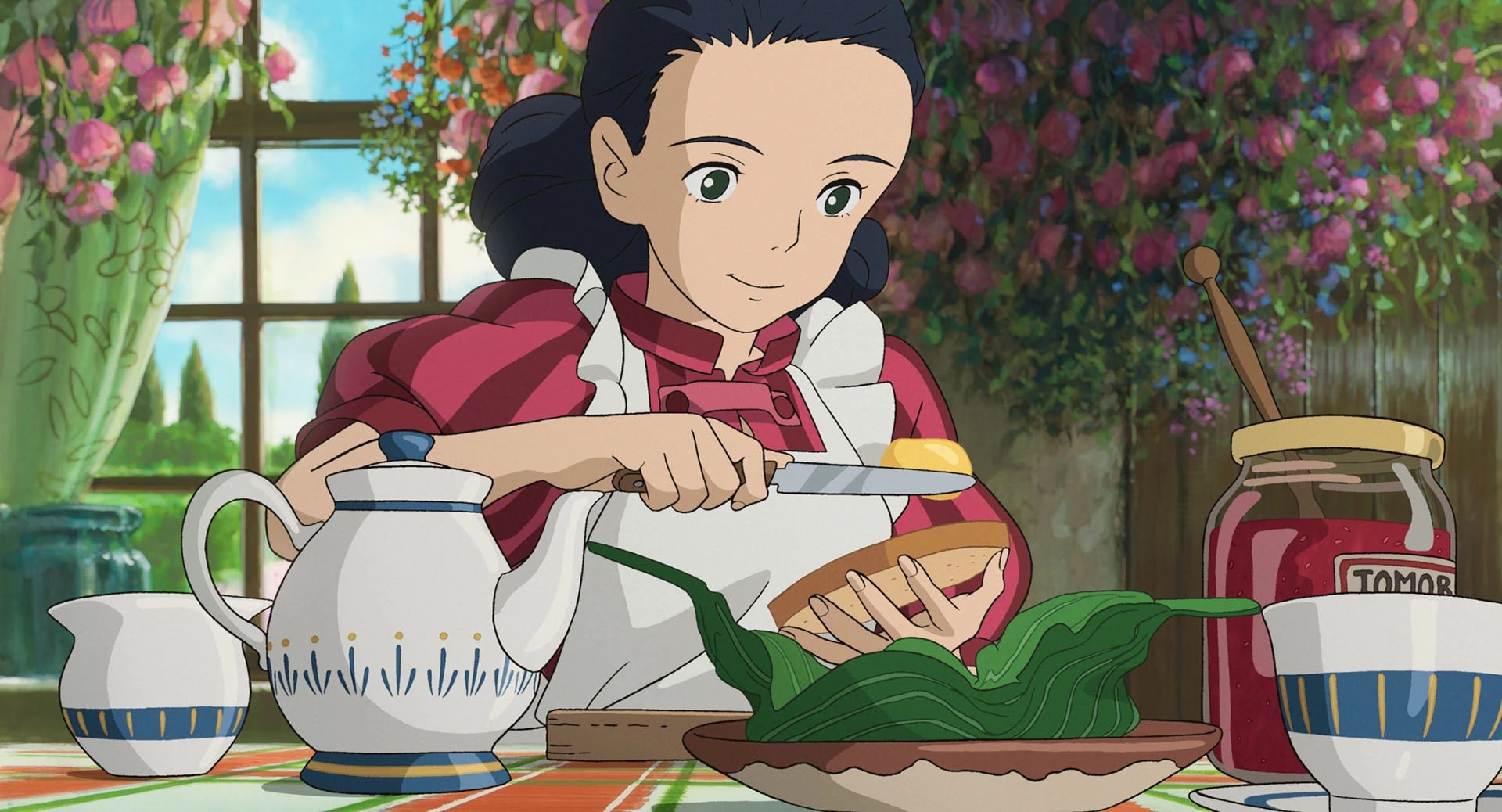
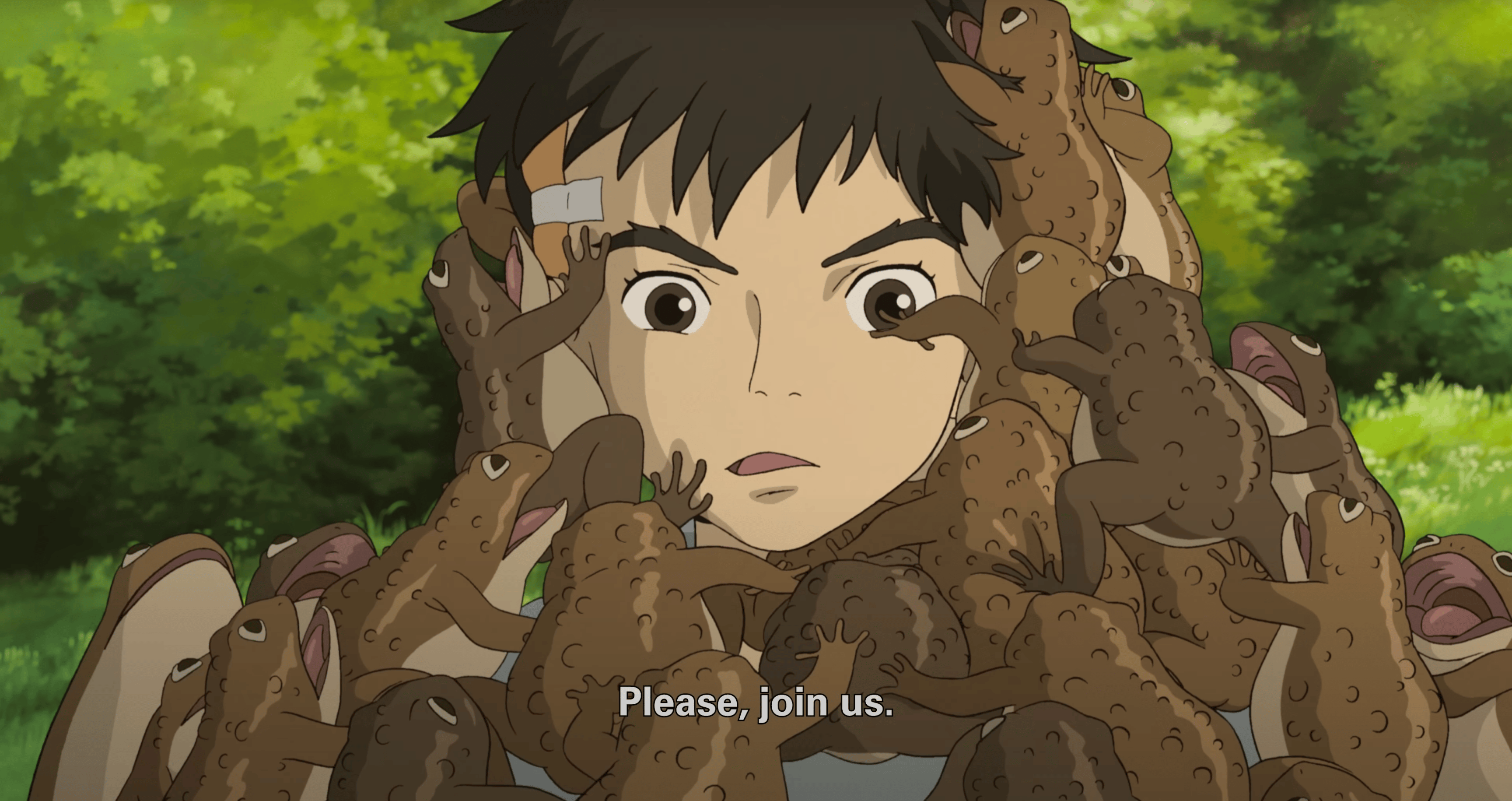
Where The Boy and the Heron exceeds is in its atmosphere, tone and backgrounds. It’s probably Studio Ghibli’s creepiest movie, with tonnes of upsetting imagery and voice acting. The heron’s introductory scenes, and the first time we see the tower are extremely evocative, and these powerful, moving scenes are plentiful here. Sometimes they’re funny, or cute, or straight up bonkers and together they help set The Boy and the Heron apart from other movies. In many ways, the film feels like the darker mirror image to Spirited Away; both stories have vivid imagery and tell a story of personal growth but this one feels just a little grittier, dirtier. But it’s hopeful. There’s a reason why it’s the pregnant Natsuko that Mahito travels the realm to rescue. It’s the story telling us that the future is worth fighting for, even if you have to kill every bird you come across to get there.
Verdict: While it might sometimes feel a touch overlong and aimless, The Boy and the Heron is a prime reminder of the imaginative and storytelling power of Studio Ghibli, and why they’re so revered in the first place.
Overall entertainment: 8/10
Violence: 3/10
Sex: 0/10
Atmosphere: 9/10
Japanese title: Literally nothing to do with the book
Birds: For an aviation guy, Miyazaki seems to hate them, huh
Parakeet king: He just sort of showed up and started slicing everything he saw
Swarms of things: At least three too many
————–
The Boy and the Heron (2023)
Also known as: How Do You Live? 君たちはどう生きるか
Director: Hayao Miyazaki
Writer: Hayao Miyazaki
CAST
Soma Santoki – Mahito Maki
Masaki Suda – The Grey Heron
Aimyon – Lady Himi
Yoshino Kimura – Natsuko
Takuya Kimura – Shoichi Maki
Shohei Hino – Granduncle
Ko Shibasaki – Kiriko
Kaoru Kobayashi – Noble Pelican
Jun Kunimura – Parakeet King
 The Asian Cinema Critic
Leave a comment