Ann Hui shows that poetry is alive and as fascinating as ever in her calm, thoughtful documentary.
“The joy, the pain, is imaginable”
Let’s face it. You don’t get poetry. I don’t get poetry. Like many great art forms, poetry can be inaccessible at times, often seeming like a language told by elites to other elites void of context and hidden behind big, closed doors. But sometimes, a kind soul will open these doors and let us in to this world. Ann Hui, whose decades of work has brought her face to face with Hong Kong’s most elite literary minds, dives into her love of poetry and brings us along for the ride.
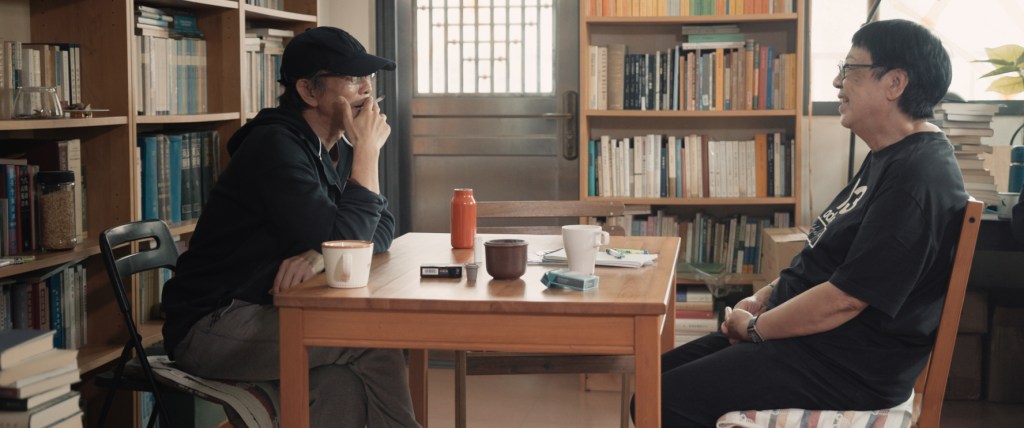
Her documentary Elegies – whose English title is far more evocative of a tone than the matter-of-fact Chinese title – is a look at Hong Kong poetry, told through the lens of two separate, though connected, narratives: that of poet Huang Canran, as well as his student and lecturer of poetry Liu Wai-tong. The nature of the documentary format, and that of poetry, beg for this to be a close, intimate film. Fly-on-the-wall filmmaking won’t do the trick, and Hui knows this very well.
Here, Hui typically stays behind the camera, but occasionally shows up in her own film, asking questions to her subjects and spending more personal time with them. This technique is extremely helpful in breaking down the barrier that documentary films sometimes put up; that of the subject and its audience. Hui’s presence acts like an audience surrogate, and as such lets us feel more connected to her subject and, naturally, their poetry.
The film is interspersed, and heavily front-loaded, with snippets of verse, carefully placed almost replacing the movie’s soundtrack. It invites us to not only listen to the words, but feel what they mean, through Hui’s direction and editing. By connecting with these people, we connect to their art and, as the film goes on, those doors open wider.
Canran’s natural charisma also invites us into the film, so when we get to the slightly more reserved Tong, we’re already settled in, and ready to spend a slightly more chill time with this guy, reminiscing about his younger days. Many of these moments are punctuated with relevant verses, allowing the poems to live in the way they were created, not consumed in a vacuum as they so often are. For example, many scenes with Tong are nostalgic and earnest, without getting too heavy, and are represented in the excellent Looking for the Kindergarten and Finding it Gone. It’s a fantastic way to introduced the audience to something they might not have ever thought of interacting with.
Of course, if you don’t have any patience for poetry, you obviously won’t have a lot of interest in Elegies, but like any good documentarian Hui is able to take her topic, and the subjects therein and make them entertaining and informative to everyone, if they’re willing to lend the film an ear. It’s a pretty slow piece, but that’s because it doesn’t really have a place to be. The film lingers, casually hanging around different scenes, letting the people speak for themselves and while it might not always be the most exciting film it’s always contemplative, thoughtful and frequently nostalgic. And most importantly, makes accessible an art that is so often impenetrable.
Verdict: Ann Hui brings her usual calm attention to detail to a topic she clearly loves, and the film feels like a passion project, in all the right ways.
Overall entertainment: 8/10
Violence: I mean, could you imagine?
Sex: More likely, but still would be wildly out of place
Poems: 10/10
Poetry theory: 8/10
Political exiles: Leave China
Economic exiles: Go to China
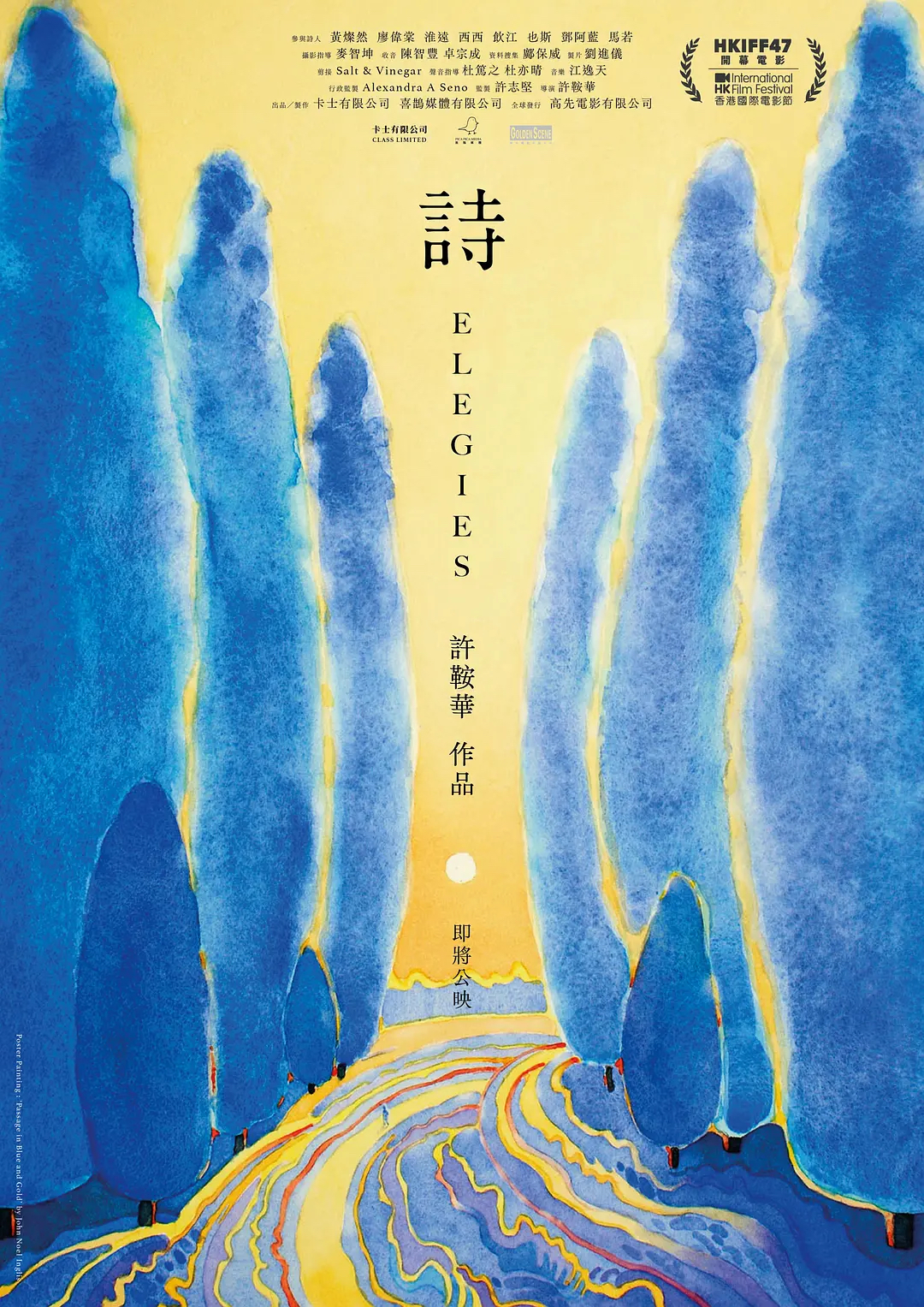
Elegies (2023)
Also known as: 詩
Cantonese
Director: Ann Hui
CAST
Huang Canran – Himself
Liu Wa-itong – Himself
 The Asian Cinema Critic
Leave a comment