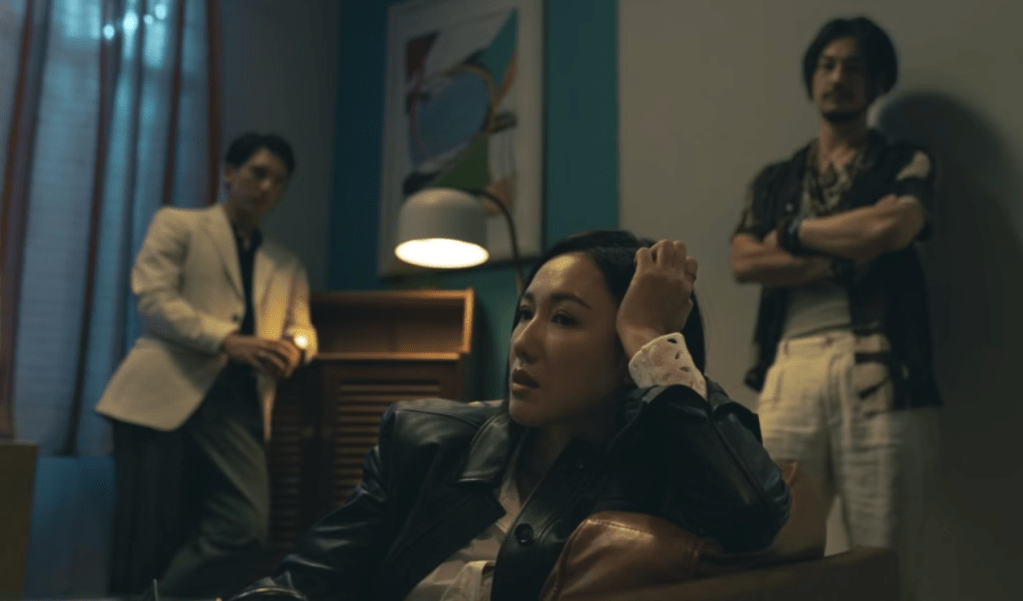
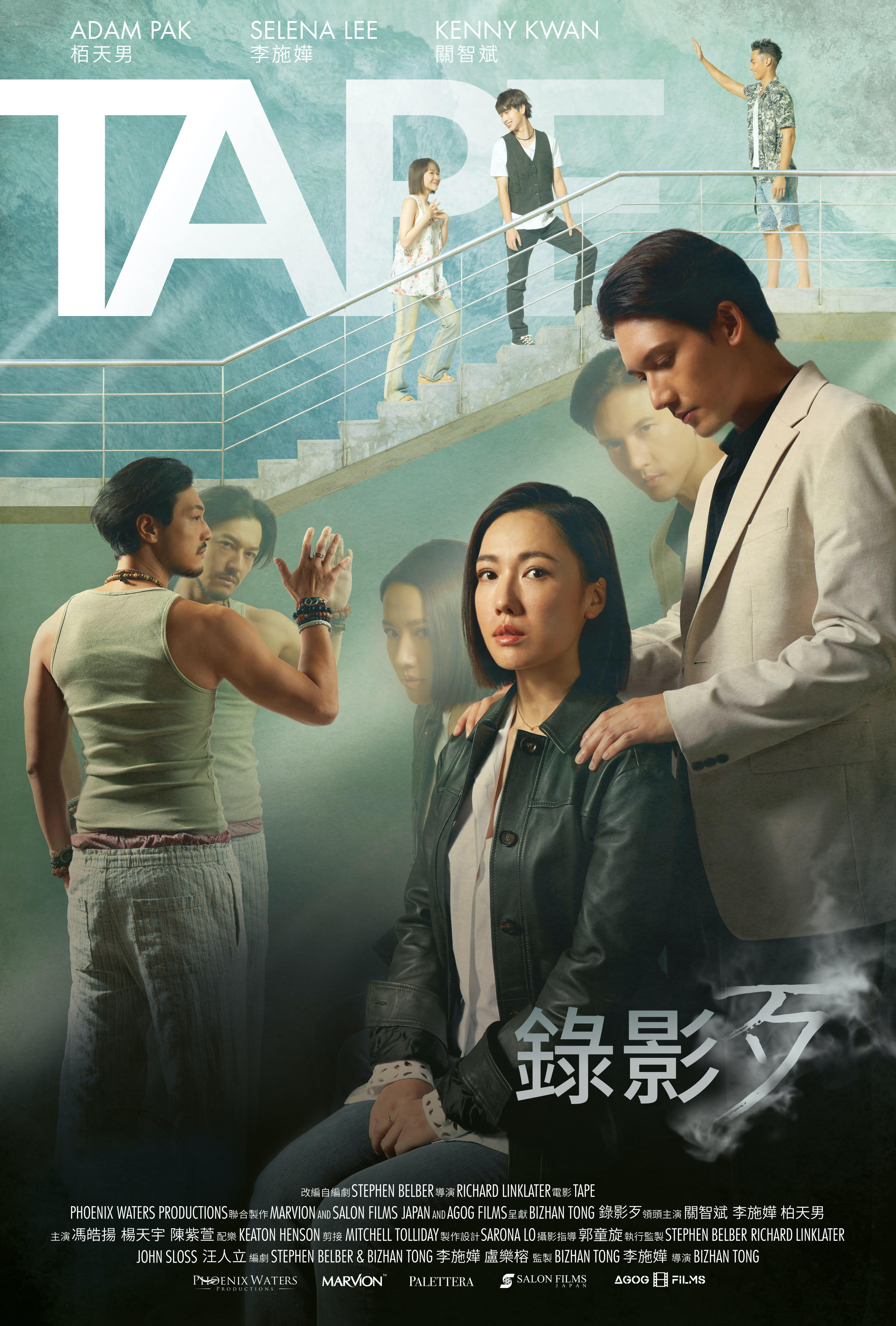
Accountability. guilt and acceptance are all put under the microscope in Bizhan Tong and Selena Lee’s tense adaptation.
“You want the last word but it’s not yours to have.”
Chong (Kenny Kwan) is a rising film director, returning to Hong Kong to screen his latest work at a festival. Wing (Adam Pak), his high school best friend has hired an Airbnb nearby and is staying there while Chong is in town. Wing invites Chong – now going by the phonier but more internationally pleasing “Jon” to reminisce, and while the conversation is at first quite simple and low-key, Wing chooses to bring up Amy (Selena Lee), his ex-girlfriend who apparently had a fling with Chong after they split up.
Wing, secretly filming this conversation, is intent on getting a confession from Jon that he raped her after their one date, though the truth surrounding the matter is unclear. What follows is a tense standoff between friend, an exploration of guilt, redemption and of men making decisions for women.
Based on the 2001 Richard Linklater film of the same (and more accurate) name, which in turn was based on a play by Stephen Belber, Tape makes it very clear of its origin, by being set almost entirely in one location, in real time – the only exception being these small snippets of their high school graduation that bookend the film.
I’ve always found that there is always a chance that plays-to-film adaptations can be a bit lacking. It’s a difficult medium to adapt: on the one hand, you have endless possibilities with editing and locations, but on the other you risk taking away most of what makes the play work: that tense, claustrophobic atmosphere. Tape largely sticks to its source material, offering a thriller that doesn’t let up, keeping you in its grip thanks to its realistic dialogue and excellent cast.
As a one act play with very little actually going on, a lot of the film rests on the shoulders of its two, later three, leads. Kwan and Pak have excellent chemistry together, and are believable as friends who have known each other for over a decade, and play their fraught friendship convincingly. Feeling like you’re actually watching two friends have a real conversation is part of what keeps a story like this from boring you, and director Bizhan M. Tong (along with co-writer Selena Lee, who wrote many of her own lines) does this excellently.
Why adapt a play or remake a film a quarter of a century later though? Tape does update its messaging somewhat, and thanks to Lee writing her own lines, Amy feels like a character with a lot more agency and power in this version. Tape, for all its positives, is effectively about two men deciding how a woman should feel. This version still does that, but Jon comes off as a bit of a jerk for insisting that Amy should feel a certain way. Amy, despite having a minor role, is a huge part of this adaptation, and comes off powerful, if clearly hurt and scarred by her time spent with the other two. This is what the new version of Tape does best: it re-examines accountability, and makes Amy a woman who might have been a victim, but refuses to take on the role.
It might feel a bit late, so long after the #MeToo movement, but it always feels like a topic that should be explored time again – it’s just a shame that it’s a topic we have to circle back to at all. Tape could have easily been a pointless remake, but it feels like a prescient story no matter when it gets told. Sure, you can always check out its other versions, but this one is actually pretty good, and completely gripping, and knows what it wants to say. It’s an update that actually feels like an update. And that’s more than most adaptations can do.
Verdict: Lead by a top-tier cast, Tape gets by on strong performances and some very real dialogue.
Overall entertianment: 8/10
Violence: 1/10
Sex: 1/10
Consensual sex: Who knows
Tapes: 0
Things not in the original: Mention of NFTs, the Metaverse
Tape (2024)
Cantonese
Director: Bizhan Tong
Writers: Stephen Belber (play) Selena Lee, Bonnie Lo
CAST
Adam Pak – Wing
Kenny Kwan – Chong
Selena Lee – Amy
 The Asian Cinema Critic
Leave a comment