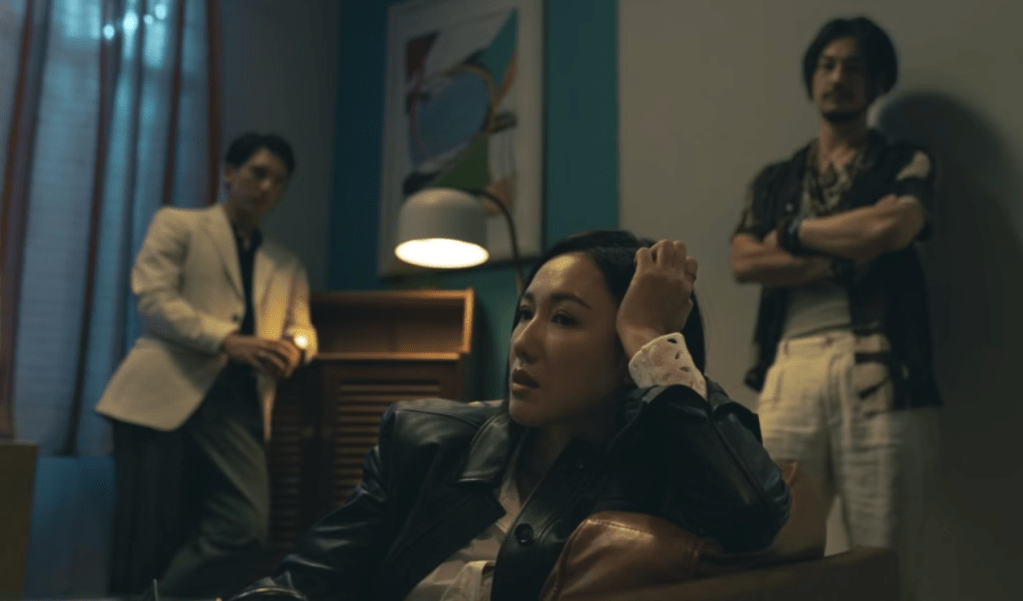
Tape, the iconic film by Richard Linklater, adapted from the play by Stephen Belber, has been remade in Hong Kong with updated messaging and a new lease on its female lead. I spoke to star and writer Selena Lee, in a car on her way back to Hong Kong, about accountability, cultural shifts and why Tape is more relevant than ever.
TACC: How did you get involved with it? Like, was this something that you wanted to write and be a part of? Or were you. Were you hired? Were you. Were you approached?
SL: No, actually, I guess it’s just a bit of luck because I met Bizhan [Tong], our director, so it was my first time meeting him. We had dim sum, and were supposed to be talking about another film. And. And then he was telling me about Tape, That’s the Richard Linklater Tape, right? Let’s talk about that instead. He said: if you’re interested, you know, would you like to play the role of Amy? I’m like, hell, yeah, of course I’m interested. Right? So he said that he wanted to bring this project to Hong Kong because he also realised there’s not much of a MeToo movement in Asia, actually.
It’s more in the West, and it’s very mature now in the West. It’s been around a lot for a long time, but for Asia, it’s still not. I feel like, you know, people are a lot more conservative over here. We don’t really talk about stuff like that. And it’s still very embarrassing or you feel, like, shameful to talk about that kind of topic. Obviously he thought it was a, you know, it’s a good time to bring something like this to Asia, such a successful film.
First of all, I’m a woman. And from my experience in the past in the past, like, I’ve dated, you know, several ex boyfriends who have actually said that if his other half has been raped before, he wouldn’t … he wouldn’t date that girl. He wouldn’t even consider it. Yeah, I know it’s crazy. Yeah, but it’s still like that in Asia. A lot of men feel like it’s something that they’re not proud of, so they probably don’t want to get into it. It’s messy, and it’s sad. So he sees the opportunity to bring this to Asia to get this topic more and more talked about. And, and I feel like growing up in this culture, I feel like I think this is what we really need.
So I took, so I took on this project and then he later on he invited me to be a producer. It’s like an indie film. We don’t have a lot of money. And he just thought that, you know, I would be able to help a lot because I’ve been in the Hong Kong industry, film industry for a long time. So I took on the producer role and also like helped translate the script. Yeah, I was all in. I was just show hand all in.
Regarding the original Tape: what did you think needed to be added, to be changed to make it more relevant?
With the original Tape, when it came out, there was no MeToo movement. It’s like one of the first films to talk about this kind of topic. That’s why I thought was brilliant. But obviously now everyone talks about MeToo. But what I feel like with Tape, it’s not like it needed updating … Well, obviously it did need updating because back then, you know, they used… had to just record the audio and whatnot. But now we have updated it with surveillance cameras. It’s different.
And also I think, it’s not really updating, but it’s more like you’re trying to put the same story into a different culture. So the culture part is where we updated most of the storyline. Because maybe back in year 2000 this topic was not something that you wanted to talk about that much. It’s okay now in the States, but in Asia, we’re still in that time. We’re still in the States in the year 2000 where people still feel like this is a very uncomfortable topic. So we’ve incorporated a lot of the culture inside the film. And also there’s been a lot that’s happened in the past few years, like Covid so we also incorporated things that have happened.
The storyline, it’s the same, but the culture part makes the story different. And also because I feel like in Asia the film is a little bit more intense than the original. Like, our version is a little bit more intense just because in Asian culture, it’s so much more shameful, like, for my character especially, it’s so much more shameful and looked down on than in the West, that it becomes even more of a struggle and more intense in terms of the internal struggle of Amy.
And I feel like, because it’s a different culture, every character is different. Like, not 100% totally different, but, like, you can feel like it’s basically Amy, my Amy, and Uma Thurman’s Amy is … you probably will get a different vibe.
On the topic of Amy, the original film, and to an extent, the first half of this film is very much a story about men making the decision on behalf of a woman. It’s two men saying, hey, you know, we’ll be the ones deciding what she knows and what she thinks she should handle this.
Their own purpose. Yeah, that’s just to serve their own purpose and to serve their own egos.
Did the fact that you were playing the character have any impact in the way that you wrote her in the agency that she was given?
I think every actor who takes on this Amy, this role will have a different take on the character. It depends on how their upbringing is or the perspective on the character. Personally, I wrote down her whole life story from ever since she’s got any memory of, you know, since she was three years old. I have, her whole timeline written. And I had a discussion with Steve Belber in the beginning, the original writer, and he was actually really surprised because he was like, “oh, my. Wow. This is the first time that I have, you know, this kind of perspective on Amy. I’ve never had this kind of take on Amy before.” He thought it was very interesting. And maybe because it’s the culture, a different culture background, we will see a certain, I don’t know, character or experiences. It’s just a different depth. Because of the cultural differences, it makes my Amy different. And he even said that, like, every person who has played Amy has a different perspective on Amy. So it’s very interesting.
Is there any major takeaway that you would like the audience to take from this movie? As both the writer and as one of the characters?
I think for. Well, it depends if it’s for, a Western audience. The MeToo conversations been talked about so much. I feel like this film is not just about MeToo. There’s so much more about it. I feel like it’s about what is truth. Every character in this film sees the reality or their version of truth differently, and it’s because of their own upbringing or their own perspective. And I feel like it’s so relevant to our world right now, especially with different takes on politics.
And I just wish that everyone who can watch this film maybe can have a discussion, maybe there are different truths to everything. What’s the real truth? It depends on your own perspective. And I hope people can be more open minded into accepting other people’s perspectives as well. It doesn’t necessarily have to be this divided. You know what I mean?
But if it’s for the Asian community, you know, Chinese or Asians watching this film, I hope that this film will trigger them to talk about it and be more comfortable in talking about this kind of topic with family and friends and maybe this discussion will bring up more deeper conversations and then making them feel even more comfortable in talking about this topic. Because it really shouldn’t be something that we should be ashamed about. I mean, I understand it’s uncomfortable because I’m also Asian and I’m Chinese. I know what the culture is like, but I feel like, you know, the more you talk about it, the more you see it, you get more used to it and you won’t feel as uncomfortable. And I hope this film will bring more conversations about MeToo.
Stuff like this is uncomfortable. I wish people can talk more about it.
Ultimately, what did you make of the character of Wing? Is he purely self-serving? Is there something else there?
He is doing the right thing for himself. I actually had a very deep discussion with Adam [Pak] who played Wing, and I personally feel like Wing is someone who is still stuck in the past because his ego has been hurt so badly. You know, he couldn’t let it go. And so he’s always trying to find reasons that why did Amy not sleep with me and slept with my best friend when I dated her? That’s just not possible. Like I’m better looking, you know, I’m the cooler guy. That’s not possible. So his ego was hurt.
He’s saying the only reason is that he’s, he must have raped her because why else would this have happened or?
People don’t just suddenly like think of rape just out of nowhere. I feel like these past 15 years, every day, occasionally he’ll think about it and then it’ll just like it keeps burning him. It’s like a scar that doesn’t heal and he just keeps picking at it and picking at it. And eventually he might have thought [of it]. Honestly, I feel like Wing has thought of a billion reasons why this has never happened between him and Amy. And then suddenly he thought of this oh brilliant reason that oh yes, he must have raped her. Honestly, it’s how people are nowadays. They see a perspective that they like and they convince themselves it’s the reality.
I think there’s so many people like that, especially with, I hate saying this, politics. Because they convince themselves it’s reality and they’ll create or they’ll find all these supporting reasons that will support their argument. That make it the only truth. And I feel like that it’s been a 15 year long process for Wing. You know, I’m sure he’s not doing this every day, but through those 15 years, it’s something that he hasn’t let go of and it’s eating him alive. So he’s slowly trying to find out reasons. He’s also having this kind of man competition with this best friend. Obviously they, you know, they grew up together and he’s, he’s just, he wants to be better.
He’s obviously immature and he wants to protect Amy. He wants to be the knight in armour. But then like, you know, I remember there’s a line in the film, that there are people who are actually trying to help the victims. But there are also people who are trying to create victims so that they can be the, the hero. So he’s trying to create the victim, make Amy as the victim so he can be the hero. And he doesn’t realize it because he’s so deep into his own belief of his truth. He doesn’t see this. And I think it’s amazing because this character is like so many people right now.
It worked so well for this current climate. I’m surprised it hasn’t been sooner.
You know, actually, I think this film should be remade in every culture. Like, I would love to see an Indian version. In every culture, it’s a different light, a different discussion. And because our version also has a lot of new discussions and new light into what we see as truth and the discussions around the character, emotions and. And the plot, that it can be replayed in different cultures, and then we’ll be able to learn more from this film.
Tape will be in UK Cinemas from 19th September
 The Asian Cinema Critic
Leave a comment