By Vivien Leung
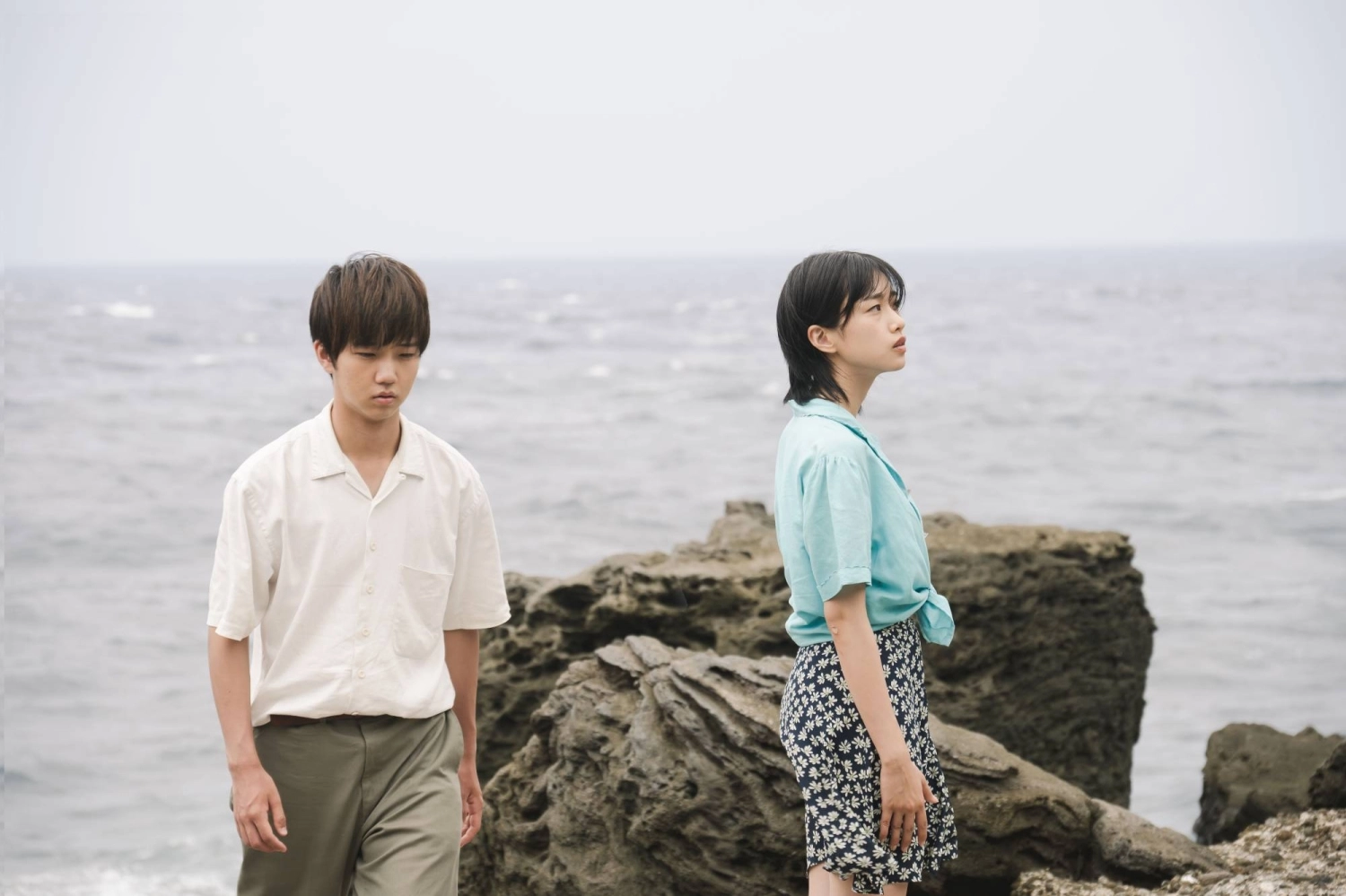
Does it make me a cinephile that I chose to shut myself in a dark room on the morning of the first day of the year? Perhaps. I went to the cinema alone, as I usually do, but what I really wanted was to see some ocean and some snow, only elsewhere. Seasonality is a distinct theme in Japanese aesthetics, and Sho Miyake embraces it by dividing the narrative into “in the frame” and “outside the frame,” into fiction and reality, summer and winter. Based on the great manga artist Yoshiharu Tsuge’s two short stories Umibe no Jokei (A View of the Seaside) and Honyara-do no Ben-san (Mister Ben of the Igloo), Sho Miyake attempts more than a reenactment of the manga scenes.
My attraction to the film wasn’t only because I’ve followed Tsuge’s work for years, but also because of its theme of travel. When the supporting characters suddenly spoke Italian on a summer beach, it felt like a breeze drifting in from the Mediterranean. The fragmented, almost accidental conversations between newly met characters had the strange intimacy of strangers who seem to have known each other for a decade. Sharing a bento under a pavilion in heavy rain is distinctly flavourful. And the swimming scene under the storm left a lasting impression—especially because I later saw Tsuge’s original manuscript, and that moment came vividly back to life.
As for storytelling, I found myself more engaged in the second half, when we stepped outside the fourth wall. The author emerges as a character, carrying her own blockages and solitude. She chooses to travel to the remotest place she can imagine, planning her itinerary in the clumsiest way. To me, she was unprepared, underdressed for the harsh snow. Yet she is hosted; she has a small night adventure with a male stranger in every way different from her. She lets herself be guided, plays the witness and accomplice. Two lonely strangers meet outside a sexual context, but they decide to be “naughty” together. The next day, she finds herself inspired and unblocked.
I was amused by the film’s development, but I was also distracted by its fragmentation. The narrative is indeed linear but just airy and nonchalant. As for the sense of travel I was after, perhaps I still associate travel with wonder and discovery. But as the title suggests, this is travel and everyday life—maybe it’s about learning to travel through daily sentiments, and to be a traveller in one’s day‑to‑day existence, finding small wonders there.
Let the mind wander — My little poem inspired by Yoshiharu Tsuge’s ‘Scenes from the Seaside’ (つげ義春の「海辺の叙景」)
雨天 海邊
傘下的人
海中的人
誰不勝寒
雨の海辺
傘下の人
海中の人
誰が寒さに勝てないのか
Rainy day by the sea
Under the umbrella,
In the sea,
Who is shivering?
Two Seasons, Two Strangers (2025)
Japanese
Director: Sho Miyake
Writers: Sho Miyake, Yoshiharu Tsuge (mangaka)
CAST
Shim Eun-kyung – Lee
Yuumi Kawai – Nagisa
Mansaku Takada – Natsuo
Shiro Sano – professor Uonuma
Shinichi Tsutsumi – Ben-zo
Leave a Reply