
A yakuza looks back on his life choices in Baku Kinoshita’s quiet drama.
“Did you turn it around?”
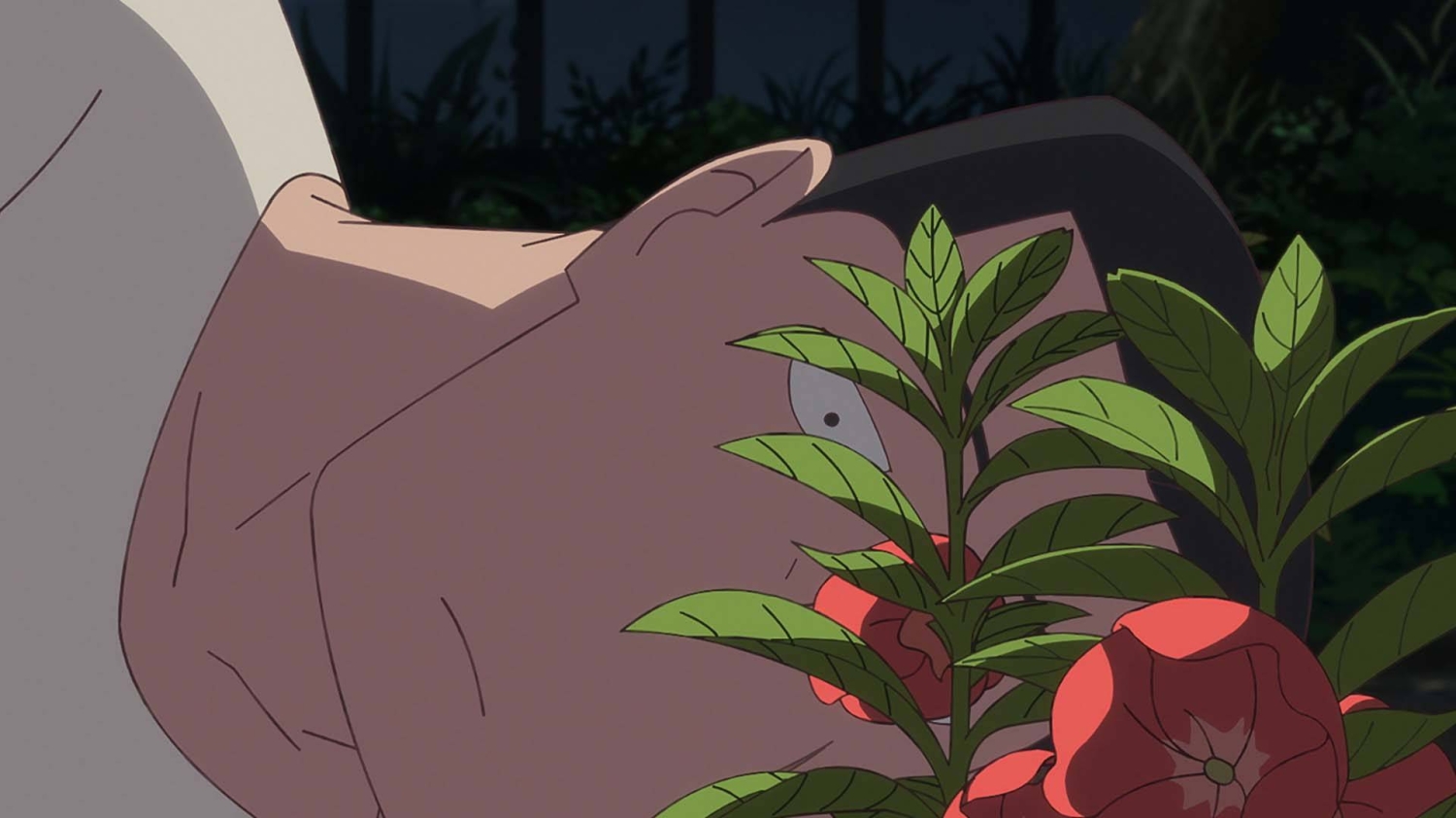
Akutsu is a yakuza who has spent the past thirty years in prison and is currently sick, dying and living his final night alive in his jail cell. He looks back at the decisions that led him here, while conversing with a talking, sentient balsam flower. The flower, whose endless generations all share a collective memory, reminisces with Akutsu as he thinks back to the his last summer of freedom: the late eighties, when he takes in a young barmaid named Nana and her newborn son.
Nana and Akutsu have a sweet relationship, but are never able to go further with it, thanks to Akutsu’s general inability to admit his feelings, and the inherent dangers of being a gangster’s wife. So they live in a quiet, but unfulfilled peace. When Nana’s son Kensuke is diagnosed with a weak heart, Akutsu makes a decision to help that ultimately shapes his life and the life of those around him.
The Last Blossom comes in strong with its premise and immediately gets to work exploring it. The talking flower was a bit of a surprise as I knew nothing of the film going in, and it gave the film a very strong, unique voice right out of the gate. For a film like this, which runs the risk of running into tedium and tropes, the flower does a lot of work to keep things interesting from minute one.

The Last Blossom’s use of the sassy balsam flower is a great choice. On the surface it allows Akutsu a person with whom he can communicate, while keeping the restrictions of his jail cell, and also provides another link to that past life through the idea that the flowers all share one memory. On a metaphorical level, it does a straightforward enough job of showing us the end of Akutsu’s life, tied seemingly as it is to the flower.
It can be a slow film at times, but anyone who has seen an enjoyed the films of Takeshi Kitano will enjoy this one. The Last Blossom shares his taste for personal drama injected with comedy, and the occasional bursts of gunfire.
All of this is portrayed excellently by animation that is simple in style, but brilliant in its execution. Characters move realistically, despite their cartoonish style, which lends the film a verisimilitude to sell its dramatic, slice-of-life premise. The story and characters are engaging and interesting throughout, with a penitent and morose Akutsu introduced to us first to give his 80s counterpart immediate context and likeability.

Writer-director duo Baku Kinoshita and Kazuya Konomoto are probably better known for their work on adapting the manga series Odd Taxi, which saw a Walrus cab driver get involved in crime. That series was a perfect blend of real-life drama, with light fantasy elements and it’s here that they perfect their formula. From its use of fantasy elements to heighten reality (and the ultimate question as to whether any of it is actually happening), to its bittersweet ending, The Last Blossom is a touching, tender look at life and the importance of good communication with the ones you love.
Verdict: With light fantasy elements there to heighten the reality, The Last Blossom tells a quiet, sorrowful but uplifting tale of murderous yakuza violence.

Overall entertainment: 8/10
Violence: 4/10
Sex: 0/10
Sass: 6/10
Sweetest moment: the a capella Stand by Me
Akutsu: Just tell her love her, dude
The Last Blossom (2025)
Also known as: ホウセンカ (Housenka)
Japanese
Director: Baku Kinoshita
Writer: Kazuya Konomoto
CAST
Junki Tozuka – Akutsu (young)
Kaoru Kobayashi – Akutsu (old)
Hikari Mitsushima – Nana (young)
Yoshiko Miyazaki – Nana (old)
Pierre Taki – The Balsam Flower
Hideaki Murata – Hayashia
Hiroki Yasumoto – Tsutsumi
Soma Saito – Wakamatsu
Kota Nakayama – Konishi
Natsuki Hanae – Kensuke
Leave a Reply