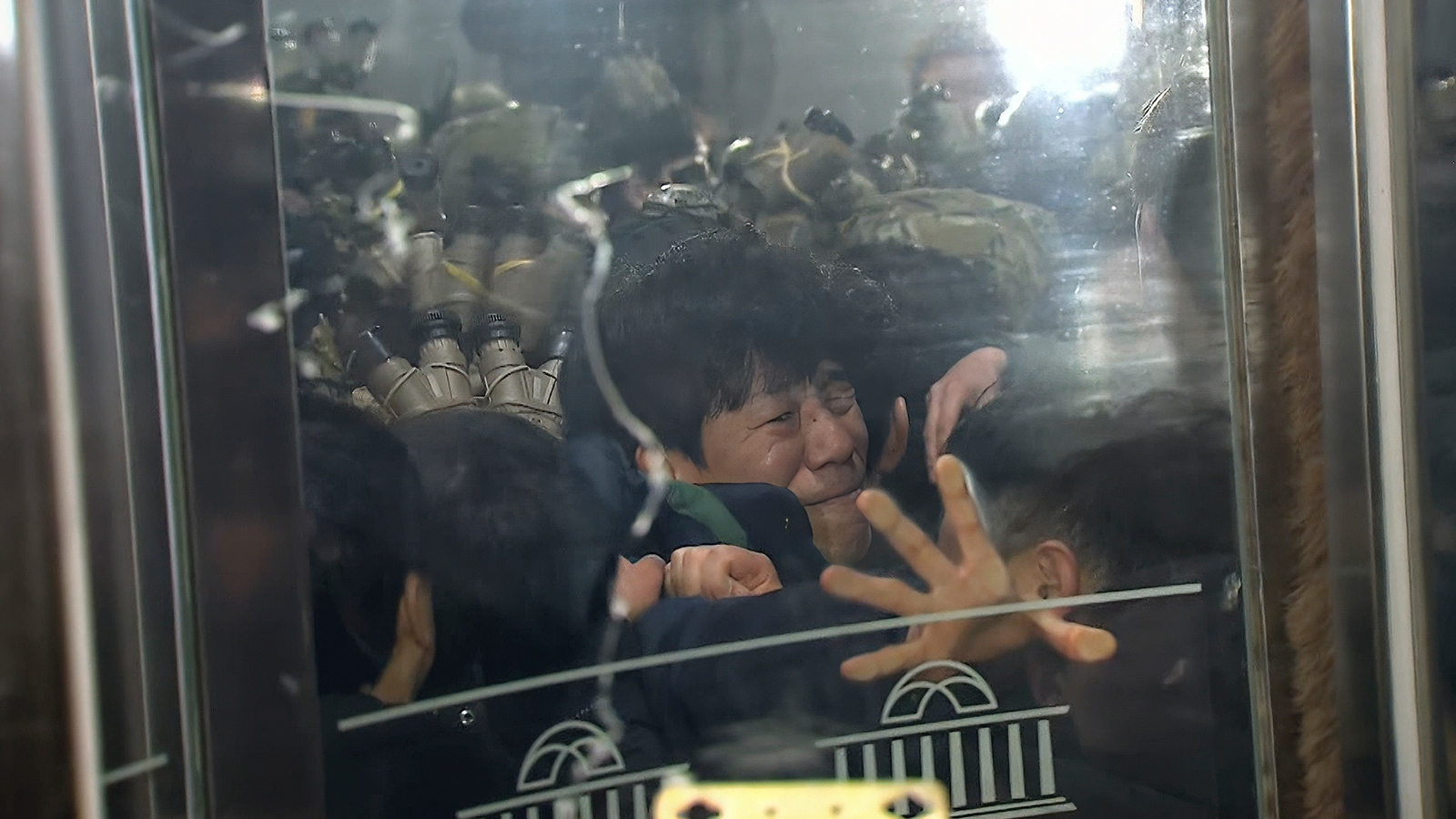

Seoul Guardians proves that the future of the country is firmly in the hands of the people.
“It’s up to the people here to deal with the situation”
Too often, with international news, a lot of the specifics go untold. Reports on the ground can cover what they can from where they are, and news anchors and writers can give whatever account they can gleam from those reports. But ultimately, so much of the news that I get, if it isn’t from the UK or – heaven forbid, the US – kind of abridged, for lack of a better term. You can’t cover everything, I suppose, even with a 24 hour news cycle.
This isn’t the case for South Korea’s 2024 martial law crisis. Live streams and text feeds ran across the BBC and Sky News, while reporters showed the events as they were unfolding. But even then, you still can’t quite get the coverage that you can with a documentary like Seoul Guardians.
For six hours, on the night of December 3rd, then-president Yoon Suk-yeol declared emergency martial law, and with it put the future of Korean democracy in question. Lawmakers scrambled to get to the National Assembly in order to vote this down, but with an increased military presence, this would prove to be a harder ask than normal.

Seoul Guardians throws us into this right away, showing us the lengths the lawmakers had to go to, bypassing a military presence that – while not actively violent (more on this in a second) – was doing what they could to stop it from happening. Woo Won-shik, Speaker of the Assembly, is given a lot of focus as he tries to get enough people in to start a session properly and get a majority vote.
As the film points out, this isn’t the first time South Korea has seen something this. History is echoed heavily as the film splices in footage from the 1980 Gwangju Uprising, an event most of these lawmakers would have lived through, and are trying to avoid. South Korea is a country with a tumultuous history, which is putting it lightly. Seoul Guardians shows us this desperation to not have history repeat itself, thanks to lots of fly-on-the-wall shooting that puts you at the scene of one of the world’s most shocking political turns in recent history.
What starts out as a messy, confusing situation quickly ramps into a fight for democracy itself, with clerks and members of the public barricading doors and pulling soldiers off of fences to give the Assembly as much time as possible to put things right. The filmmaking is shaky, and chaotic here and it really feels like you’re there on the ground with everyone. And it feels dangerous, largely thanks to the directors and the tight editing by Stacy Kim.
But, as the film points out, the soldiers don’t give the impression that they particularly want to do this. They have to, because they’ve been ordered to, but as far as military coups go, things are very bloodless. Perhaps these are soldiers who also remember worse times, and can’t go through with it. Not again. Seoul Guardians, down to its title, tells us everything we need to know about the people of South Korea, and the power they wield to live life the way they want. It’s possibly something other countries should learn.
Verdict: Sometimes pointing a camera and hitting record is the best filmmaking technique, and Seoul Guardians understands that, letting its real events unfold naturally – aided by the ghosts of those who saw this before.
The Seoul Guardians (2026)
The Seoul Gaurdians is screening as part of the Fantasia Film Festival
Leave a Reply