Four men find acceptance and camaraderie in a dangerous world, in Yu Kan-ping’s sweet drama.
The Martial Law era of Taiwanese history is one of the longest periods of martial law in any country on the planet. During that time, Taiwanese people lived in fear of being outed as insurgents, with thousands imprisoned over its four decade run; Chinese homogenisation forced Taiwanese languages out, and Taiwanese cultural norms were ousted in favour of a communist China agenda. Censorship, as one might assume, ran rampant.
It is also during that time that important pieces of Taiwanese literature were released – one such novel was Pai Hsien-yun’s 1983 novel Crystal Boys from which a film was also made.
It told the story of A-qing (Hsin Shao), a young gay man who is forcefully kicked out of his father’s house after he is outed. He spends a night outside before being found by Yang (Yueh Sun), a photographer whose hobby is finding lost boys and giving them a home. There, Qing meets a lot of other young men in similar situations, and begins to learn to accept himself in the process.

The Outsiders (or Outcasts in some translations) was, at the time of its release, quite a controversial movie. It was the first to openly portray gay life in Taiwan, and did it in as un-sensationalist a way as possible. Its negative depictions of the KMT (the Kuomintang which was at the time in power), and the scenes showing a seedier side of New Park as a historic cruising ground for gay men were considered too much, and so eleven cuts were made. Scenes of the male characters touching were shortened or removed, as was the scenes showing the militaristic father violently throwing Qing out.
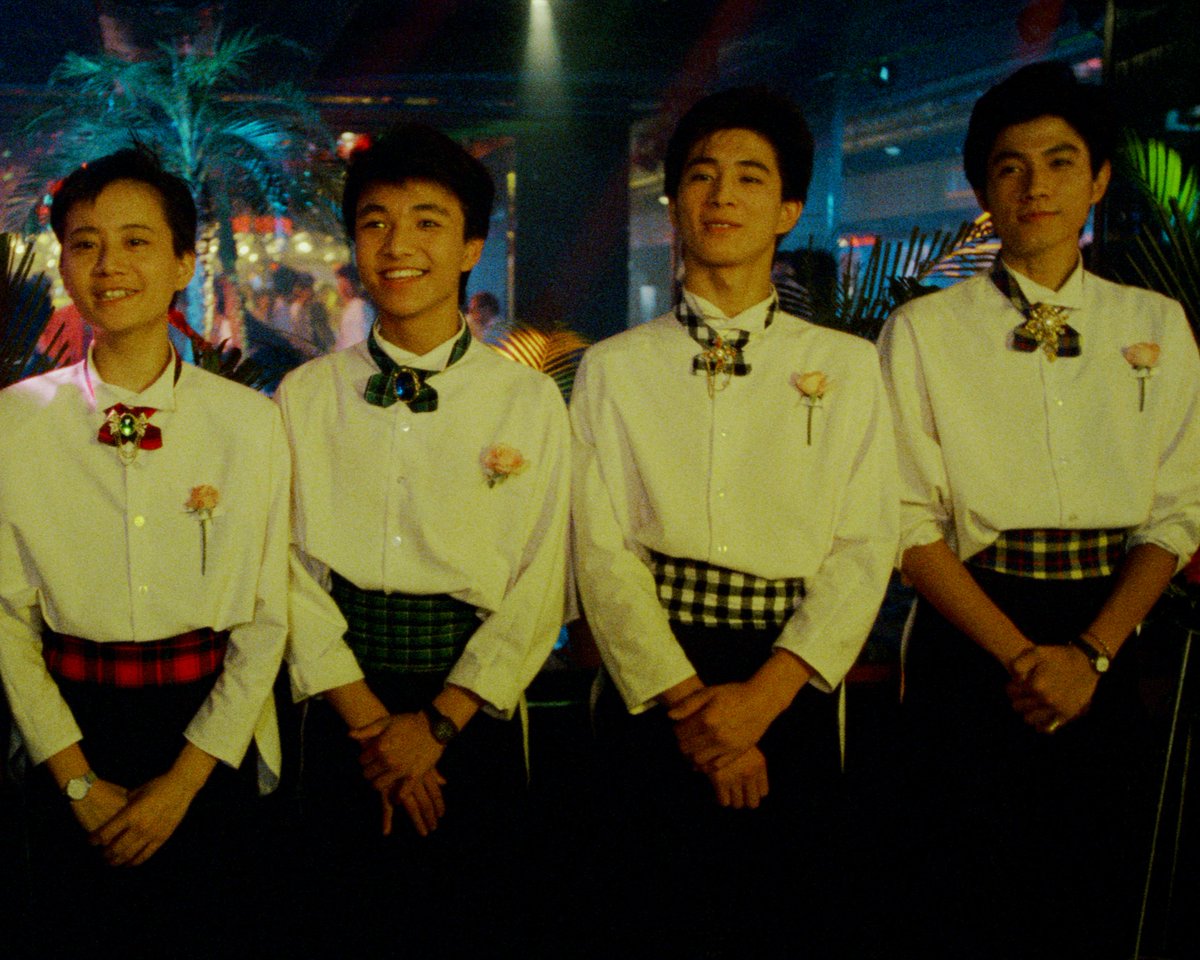
Despite this, the movie was still released, and became a landmark film for Taiwanese gay culture. One of the most striking aspects of The Outsiders to me was in how well it portrayed every day scenes. Seeing the friends hanging out, working at Yang’s new gay bar, or getting arrested for cruising at the park felt fun, and real. Pai’s novel was notably a bit darker, but both his screenplay and Yu Kan-ping’s direction do a lot of work in showing an audience that hey, these guys are just like us. It might go without saying now, but it’s movies like this that paved the way for other, more daring efforts over the years.

The mark of a successful pioneering effort is that the path it paved has become well-worn and unremarkable. The Outsiders’ greatest success in how it redefined homosexuality in Taiwan, not as a medical condition or a mental disorder, but as an innate part of who you are, one that changes nothing about how you live your everyday life. The film shows A-qing as a remarkably well-adjusted man, considering everything he has gone through. The treatment he receives from his parents, whether to do with his sexuality or not, certainly tests his resolve, but regardless he remains resolute to treat his family right whenever possible.
I’m glad it’s found its way to a remaster, with all cut scenes restored as well. Outsiders is an important piece of Taiwan’s cultural history, away from the White terror of a militaristic government. Well, more or less.
The Outsiders (1986)
Also known as: Outcasts, Crystal Boys
Mandarin
Director: Yu Kan-ping
Writer: Pai Hsien-yun
CAST
Hsin Shao – Li Qing
Kuan Kuan – Qing’s father
Yueh Sun – Yang
Su Ming-Ming – Qin’s mother
Chen Wei-hsin – Di-wa
Chiang Huo-yen – Kui-lung
Dai Ling li – Man-hua
Ma Shao-chun – Lao Shu
Leave a Reply