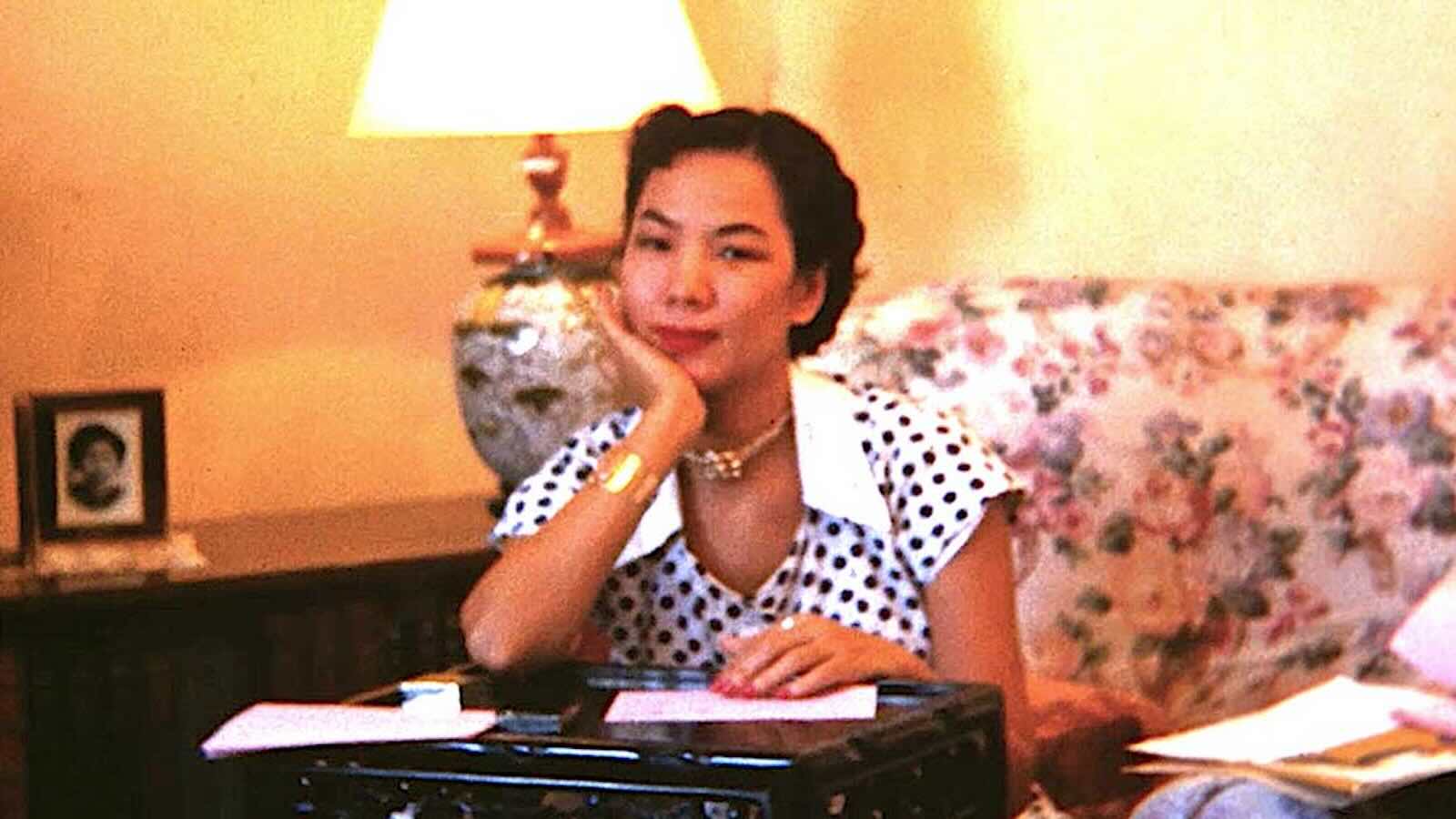

“What’s in a name” is not so rhetorical a question in Mary Stephen’s fascinating documentary.
My name is Basil Baradaran. That is less than half of my legal name, as the rest is hidden behind double barrels and middle names, but it’s the name I go by because, well, who has the time. It’s a weird name, combining different Caucasian histories with my father’s Asian side, and one I’ve felt I’ve explained a lot over my life. But it’s one whose history I can trace back pretty effectively. Mary Stephen, the Hong Kong filmmaker with a notably English name, does not have that luxury. By all accounts, her name should be something else, something Chinese in origin – and in her latest film, she dives deep into home movies, old records and family history to discover the truth.
Palimpsest: The Story of a Name shouldn’t work. It’s a two-hour collection of home movies and documents attempting to find the answer to a question no one in the audience thought they’d ever ask.
And yet.
Stephen is an accomplished filmmaker. She knows how to tell story through film, and if you wanted proof for whatever reason, Palimpsest will do just that. From the first scenes that attempt to tell the story of her father’s Australian aboriginal birth, to the final denouement involving lions and employment cards, the story of Henry Stephen and his many past lives is immensely satisfying to watch.
One of the most interesting side effects from this film was just how much closer to Stephen I felt after having seen it. For several very evident reasons, Palimpsest is a deeply personal movie – and also one that speaks to greater, deeper truths. The film isn’t just the story of a father with a made-up name, whose many playful lies obscure the truth behind his own history. It’s also about how even now many Asians struggle with the name they’re given, finding better opportunities, higher salaries and general acceptance when they use an English name.

Hong Kong was well under the grip of the British colonists at that point, and so it’s no wonder that Stephen, above his other Chinese colleagues, found the promotions and the raises easier to come by. This helped him and his family immensely: The home films archive footage don’t just add add a level of historical credibility, but also remind you that personal cameras were very much a luxury. The family put a lot of work into their businesses over the years, that much can’t be denied, but – the film asks – how much could be attributed to the name?
Like his own diaries, the life of Henry Stephen is filled with hidden paths, pockets of history that need to be dug at to be uncovered. The mystery is so intriguing because it simply cannot happen anymore. In a world where so much of what we do is documented through CCTV, social media and everyone’s immediate access to a camera, these sorts of secrets are basically impossible to keep or come across now.
Palimpsest: The Story of a Name ultimately works because it tells us two tales. It gives us a mystery filled with quirky characters, tragic backstories, war, disaster and romance – and it also tells an even harsher tale of the systematic xenophobia that made the lives of the Hong Kong people so difficult in a time that was already pretty rough. And the second story is one that will still resonate with audiences, a hundred years after Henry posed with those lions.
Verdict: Deeply personal and yet also very global, Palimpsest: The Story of a Name has a lot to say about the past, and more importantly, the present.

Palimpsest: The Story of a Name (2025)
Cantonese, Mandarin, English, French
Director: Mary Stephen
Leave a Reply