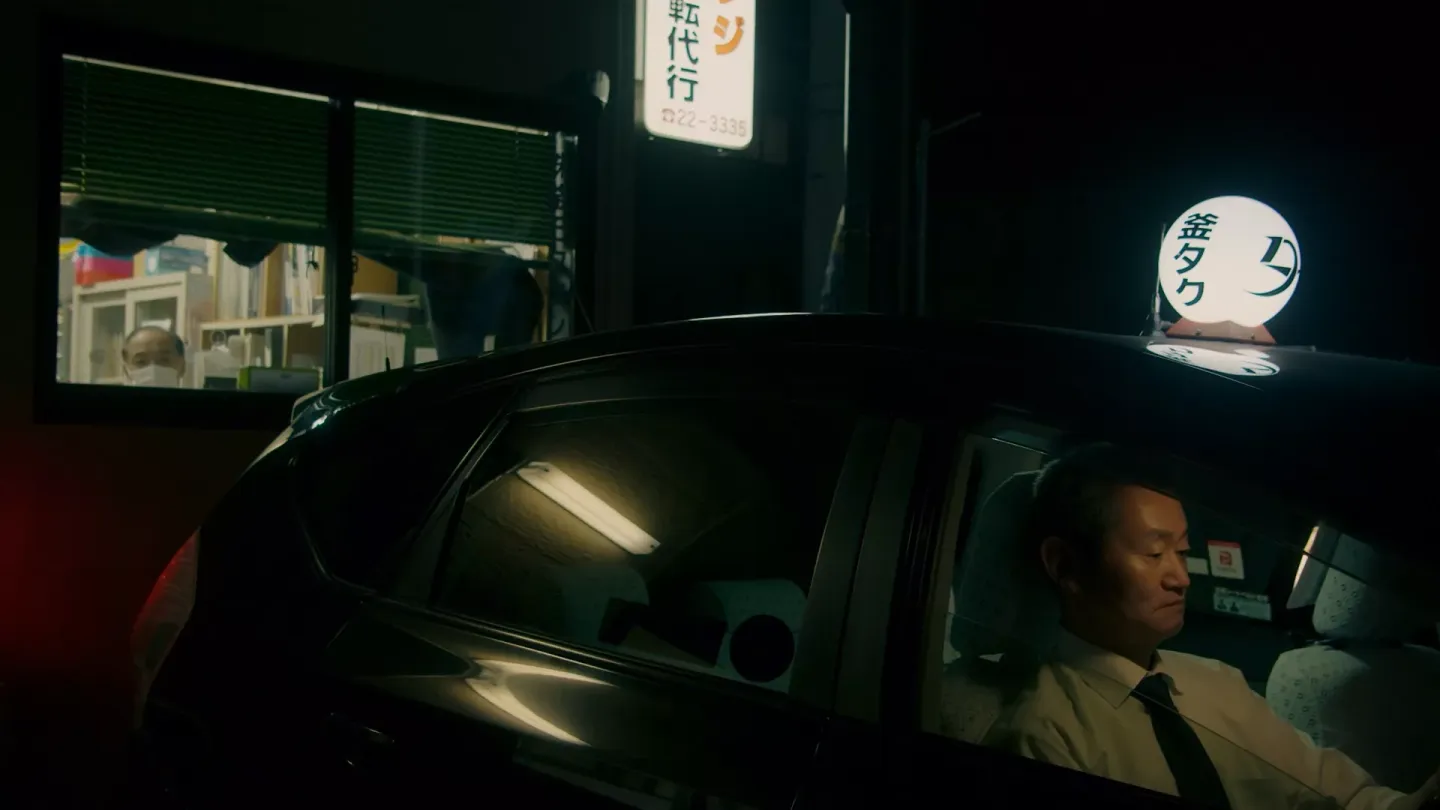

Nothingness has never felt as physically present as it does in Katharine Round’s Tohoku tsunami documentary.
“Where is everybody?”
What is like to live in the shadow, the aftermath of a natural disaster? I don’t mean the immediate fallout; the stuff that’s covered by the news, but rather the long-term effects. What happens to a town that gets wiped out when a tsunami hit? Can it ever recover?
There are a plenty of questions to be asked, and none of them have easy answers. And they’re the questions faced by the people who live in the town of Kamaishi, Iwate prefecture. Hit hard by a tsunami in 2011, the town is still reeling, feeling the affects even after all this time. Most notable, amid the rebuilt office and repaired streets, is the sheer absence of people.
In Ghost Town director Katherine Round asks those questions as well, and looks to an interesting source for the answers: taxi drivers. Eschewing interviews with seismologists, sociologists and everyone else, she finds folk wisdom and insights from the people who roam these streets the most, and get to know the locals who they drive around.
Cameras are set up inside of taxis, as the film follows about five of them, picking up their regular passengers. They discuss the state of the town, old favourite spots now void of life and the future of Kamaishi. One of the passengers, producer Shiori Ito, asks more probing questions and requests to be driven in as many different parts of town as possible, to get the full story.

And that’s it. The setup is extremely simple, but the payoff works immensely well. Choosing cab drivers as your focal point gives the film an immediate, in-depth, knowledgeable individual who have known every detail of this town for years. It gives their commentary an added truth that can only come from people who have seen these streets change over decades.
Like the taxis told to just kind of drive anywhere, there is a portion of Ghost Town that does meander somewhat. It zigs, and zags, merging fact with fiction, blending the eerily empty streets with the drivers’ own beliefs about the afterlife, spirits and the souls of people who still haunt the once-thriving town.
Round uses our modern love of liminal spaces to give us the slightest hint of horror. Without showing us the tsunami, the losses of life or anything else like it, the film is still able to capture the feeling of something being lost forever due to something cataclysmic. There is meant to be life in these shots, but the camera captures only areas of blackness.
In Ghost Town, the past is prologue but the present day feels like an epilogue. The entire story took place one day in 2011, and now the people of Kamaishi live in in limbo, with no continuation of their story in sight. More so than any work of fiction, there is a real, uneasy horror there. As the drivers watch the sea from a favourite coastal spot, the ocean seems calm, almost beautiful. But the void, sometimes, watches back.
Verdict: While it might look empty at first, Ghost Town’s lofi documentary style uses that emptiness to tell a powerful, haunting story.

Ghost Town (2026)
Japanese
Director: Katharine Round
Leave a Reply